James Dooley & David Quaid: The SEO “Best Practices” We Ignore

Most of what is sold as SEO best practice is a checklist that never moved a ranking. What decides whether a page is found is authority multiplied by relevance, adjusted by clicks — not a reward the engine owes for content it cannot judge. Feed the branded and query signals it already measures, test the opposite of what you believe, keep the system simple, and spread risk across domains so no single mistake ends the whole thing.
Leave a Comment

Abstract
Three hours of two practitioners going through the field's received wisdom and saying which parts they ignore. The position is stated at the top — trust the in-house testing over the public conversation — and the evidence is unusually concrete: a deliberately bad page that ranked first in four hours, a broken penalised site holding a twenty-thousand-a-month term, a matching domain reaching the top three in under a day on fed queries.
- The core failure is treating the work as putting everything in, which introduces cannibalisation and then people give up.
- A penalty is applied after indexing, like a throttle fitted afterwards, which is why penalised sites stay indexed.
- The engine is bad at recognising brands and treats them as ordinary keywords, so a brand can be manufactured.
- The work reduces to relevance multiplied by authority, and neither term alone is enough.
- The search index is a moat that cannot be rebuilt, and the challengers currently depend on scraping it.
- Keyword tools only hold terms that appear in advertising auctions, so most real demand is invisible to them.
Everything below follows the conversation in order, from the opening stance through what a page actually needs, into branded search, quality raters and manual actions, out through schema, testing culture and core updates, and finally into where the money and the leverage are now — tools, aged domains, matching domains, and the free surfaces somebody starting from nothing can rank today. For anyone building a personal brand the useful part is the evidence standard: almost every claim here comes with the test that produced it.
Chapter summaries
00:28 - Best practices get ignored in favour of what testing shows works
Ignore "best practices" and do only what works; trust in-house testing over the public conversation.
"I'd see I don't really I don't I don't look at best practices. I"
— 00:28
The stance is stated at the top and everything after it follows: trust what the in-house testing shows over what the public conversation repeats. It is not contrarianism so much as a refusal to take unverified instructions.
01:47 - The core failure is treating the work as putting everything in
The core failure is treating SEO as "put everything in" — copy every competitor page type, add schema/images/tables/5,000 words — which introduces cannibalisation and then people give up.
"big problems if if if we had to pick somewhere to start um is"
— 01:47
Copy every competitor page type, add markup, images, tables and five thousand words — and introduce cannibalisation, which is why people then give up. Addition is the failure mode, not omission.
03:40 - A page needs almost nothing if the site has authority
A page needs almost nothing: it will be indexed as long as the site has authority — "you just need a page".
"um very hard practices like for example um the content structure that you have"
— 03:40
It gets indexed because the site has authority, not because of anything on the page. The crawl-depth story is wrong too: a deep page is indexed because it is important rather than because it is shallow.
05:11 - The engine will never appreciate quality, because quality is subjective
The engine will never "appreciate quality," because quality is subjective; factual content (capital of a country) indexes fine but is not where the game is.
"and I and I think with almost everyone I've spoken to on X there's"
— 05:11
Quality is subjective, so there is nothing there to appreciate. Factual content indexes perfectly well and is not where the game is played, because nobody is competing over the capital of a country.
06:19 - A technically broken penalised site still ranked near the top
A technically broken, penalised, content-thin betting site still ranked near the top for a 20k/mo term — because it had branded search, news presence and social traffic.
"And I can even give a domain. So there's a domain called Get Your"
— 06:19
Branded search, news presence and social traffic carried it there, on a twenty-thousand-a-month term. Every on-page fix would have been beside the point.
08:47 - A deliberately bad page reached first position in four hours
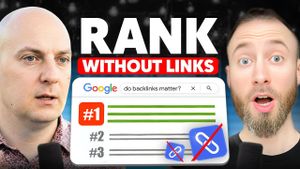
A deliberately bad page (an unfinished draft with a note to a colleague plus one link) ranked #1 in four hours — because the whole site sat in a positive ranking state.
"quality content. I've got one more example and then obviously we can talk about"
— 08:47
Site-level authority carries individual pages the content alone could never earn — a placeholder page took first position for a hard branded term within hours. The boundary is stated in the same breath: do not churn out crap and overstep what the authority will carry.
12:48 - An assistant returns the consensus of the loudest pages rather than the truth
An AI assistant returns the consensus of the loudest pages, not the truth; feed it a primary source and it reverses.
"thinking about it. Like if Google knows all of this and we went through"
— 12:47
Models synthesise the volume of enthusiast content, so the majority opinion wins whatever the evidence says. An assistant called a therapy science-backed and then reversed the moment it was handed a health-agency page — the source changed, not the reasoning.
14:56 - Judging the assistant's advice requires already knowing the subject
You must already know SEO to judge whether the assistant's SEO advice is any good — otherwise it generates mal-investment.
"people you can't use it, but I think I think Ed and I said"
— 14:56
You have to know the subject already to tell whether its advice is any good, and if you do not, the output becomes mal-investment. The tool is most dangerous exactly where it is most useful.
15:11 - Content is the package rather than the vehicle
Content is the package, not the vehicle: new "good content" alone will not grow a site; distribution and brand do.
"it sometimes it sounds like and I want to step back and say I"
— 15:11
Growth comes from being carried by an audience rather than from publishing merit. A name took off from appearing on a strong show rather than from years of blog posts — and good content still matters, as the package rather than the vehicle.
16:03 - People imagine a relationship with the engine that does not exist
People imagine a relationship with the engine ("I did X and it won't reward me") and never ask why they can't outrank the giants for a generic term.
"Thank you. That is the perfect demonstration. But in in an SEO world"
— 16:03
People describe doing the work and not being rewarded, as though there were an agreement in place. The question they never ask is why they expect to outrank the incumbents for a generic term at all.
17:23 - For a newcomer the confusion is genuine and structural
For newbies it is genuinely confusing: you cannot test until you get clicks, and nobody can define "good content" objectively — the framework only applies to your-money-your-life topics.
"for for newbies which makes up the base of SEO and the base of"
— 17:23
You cannot test until you have clicks, and nobody can define good content objectively — the framework people cite only applies to a narrow category. The confusion is structural rather than a failure to read.
20:21 - A penalised site stays crawled and indexed
Penalised sites stay crawled and indexed; a penalty is an "aftermarket throttle" applied post-indexing, which is why cannibalisation persists.
"another interesting thing you brought up is that yes penalized sites the funny thing"
— 20:21
A penalty is applied after indexing, like a throttle fitted afterwards, which is why a penalised site stays crawled and indexed and why cannibalisation persists through it. The mechanism explains the symptom exactly.
21:21 - The trust framework is a poor ranking factor and a good training framework
The experience-authority-trust framework is not a big ranking factor, but it is a good internal framework for training a team (case studies, awards, reviews, trust, authority).
"with regards to like so I've seen one or two I've I've looked"
— 21:21
A shared framework keeps a team uniform even where the engine does not read it as claimed, which is a real use for a bad ranking factor. Author boxes went above the fold after an update and fixed nothing. It also touches news, not only money and health.
23:34 - The document itself mentions almost nothing people attribute to it
The actual framework document mentions none of what people attribute to it (backlinks, return visits); what it has "become" is an assistant telling you to add an author bio and make claims — and anyone can make a claim the engine cannot verify.
"so I think I think e can be a great framework what what"
— 23:34
The document mentions none of the things attributed to it. What it has become is an assistant advising an author bio and some claims, and anyone can make a claim the engine has no way to verify.
29:46 - The money-and-health category is narrow and query-specific
Your-money-your-life is narrow and query-specific, not an industry: it means genuine detriment to society, where only the branded parent domain could surface the answer.
"the article about from New York search 2024 when Matt sorry when um John"
— 29:46
Oversight is reserved for a small set of harmful queries and applied by phrase rather than by topic. A regulated medical protein is findable with the brand name and not without it. A bad lawyer, by this standard, is not societal detriment.
32:06 - More branded search reliably lifts the whole site
More branded search reliably lifts a site's rankings — pursue it via social, image and video ranking; even pure click operators trickle branded searches up and the whole site lifts.
"Yeah. Just to go through a couple of the things on the EAT"
— 32:06
It lifts the whole site, and it can be pursued through social, image and video rankings. Even pure click operators produce a trickle of branded searches and the site rises with them.
33:45 - The engine is bad at recognising brands, so a brand can be manufactured
The engine is bad at recognising brands (its brand filter is a crude regex) and treats brands as ordinary keywords, so you can manufacture a brand; navigational CTR of 40–80% dwarfs the 0.8% on competitive terms.
"So, here here's what I've seen um and tested and and and I"
— 33:45
Its brand detection is a crude pattern match and it treats brands as ordinary keywords, so a brand can be manufactured. Navigational click-through of forty to eighty per cent dwarfs the fraction of a per cent on competitive terms — the branded query is the cheap door.
36:53 - A known entity needs a fraction of the searches to enter auto-suggest
A known entity (knowledge panel) needs only ~3,000–5,000 searches to append its brand to a keyword in auto-suggest, versus roughly ten times more for an unknown; feeding "keyword + brand" searches lifts the keyword over time without raw click spoofing.
"again like again I just on one or two bits on it like with"
— 36:53
A known entity with a panel needs perhaps three to five thousand searches to append its brand to a keyword in auto-suggest, against roughly ten times that for an unknown one. Feeding keyword-plus-brand searches lifts the keyword itself over time.
39:02 - The exact query can be fed to the algorithm directly
You can feed the algorithm the exact query: get partners to search "[brand] [target keyword]" and an exact-match domain reached the top three for the target term in under a day.
"And so this is the third reason I absolutely loved your podcast and you"
— 39:02
Have partners search the brand alongside the target keyword, and a matching domain reached the top three for that keyword in under a day. It is the most direct demonstration in the episode that the input is the query itself.
43:54 - A quality-rater visit usually precedes a penalty
When the human quality raters visit (visible in analytics), it usually precedes a penalty: ~90%+ of sites that get a rater visit get hit — and it only happens once you start ranking for big terms.
"See, see this there's a there's a couple of other things on eat"
— 43:54
A visit from a human quality rater is visible in the analytics and usually precedes a penalty — reportedly for the large majority of sites it happens to. It only happens once you start ranking for terms worth reviewing.
46:14 - The penalty that followed was about transparency rather than content
The penalty that followed was a Transparency manual action (missing dates, bylines, author/publisher and contact info) affecting all pages — so ticking those boxes is worth it once you rank big, and worth building the owners as personal brands.
"like what? And and guess what penalty that we got and it's a and"
— 46:14
The action that followed was about transparency — missing dates, bylines, publisher and contact details — applied across all pages. Ticking those boxes is worth it once you rank at that level, and building the owners as personal brands supports it.
51:32 - The foundation is authority rather than the framework
The foundation is authority (internal plus external), not the framework: the engine lowered the bar but the world raised it, and since ~2012 half the industry buys links while non-ranking sites all lack them.
"That's where I would get nitpicky and say it's not a foundation, right?"
— 51:32
The engine lowered the bar and the world raised it: since around 2012 half the industry buys links, and the sites that do not rank uniformly lack them. Authority is the foundation and the framework is decoration on top of it.
1:01:55 - Schema is required only where the engine reads data instead of text
Schema is required only where the engine reads structured data instead of text (job listings, flights, hotels) — but if every competitor has it, it is not a ranking factor, and long-scrubbed types (FAQ, how-to) are still being sold.
"discuss with you is schema, right? Because at times I feel like I don't"
— 1:01:55
It is required where the engine reads structured data instead of text — jobs, flights, hotels. If every competitor has it, it is not a differentiator, and long-deprecated types are still being sold. Its genuine uses are disambiguation and identity.
1:08:00 - The people-also-ask hack gives every question its own page
The people-also-ask hack: when you cannot rank on a competitive page, give every question its own page — document-name relevance ("what is a ribeye steak" = 100%) plus authority lets a weak page bounce competitors out.
"right? just go to LinkedIn or X or Reddit and do a search for"
— 1:08:00
When the competitive page cannot be ranked, give every question its own page: the document name carries the relevance, and with authority behind it a weak page can push competitors out. It is the highest-leverage structural move available.
1:10:46 - A query earns its own page only when the authority supports it
Whether a query deserves its own page or just an H2 depends on your authority; a concise answer in the H1/URL/title beats hiding it as the fifteenth H3, which causes bounces and downgrades the whole site.
"You know, do you know what? That's such an advanced strategy. And we"
— 1:10:46
A concise answer in the heading, the URL and the title beats the same answer buried as the fifteenth subheading, which causes bounces and drags the whole site down. Authority decides which of the two you can afford.
1:12:39 - The work reduces to relevance multiplied by authority
SEO reduces to relevance times authority: 10,000 authority points across a topic at 50% document relevance yields 5,000 effective, and a weak click-through battle erodes authority further.
"Absolutely. And and I think this is this is so important because so"
— 1:12:39
The engine multiplies relevance by authority and then adjusts on click behaviour, so a page half-relevant to its query halves its own authority going in. Conference-level advice is useless to a first site for the same reason — and the warning stands: do not anthropomorphise the engine.
1:16:14 - Much of the bad advice comes from people who only ran large brands
Much misadvice comes from people who only ran big brands (natural links, a PR agency doing the work) and think they are great SEOs — but could not rank a new domain from scratch; string-matching still works in longtail local, authority layers pile on in competitive markets.
"and and this is what I would say with regards to I used"
— 1:16:14
People who only ever ran large brands — with natural links and an agency doing the outreach — believe they are excellent practitioners and could not rank a new domain from scratch. Their advice is accurate about a world most people do not live in.
1:18:44 - Technical work at scale is rolling the dice cheaply
Technical SEO at scale is rolling the dice — because you cannot calculate the algorithm, a million-page site can bet on every table cheaply and a few will hit big.
"Just before you said that, I was just about to I didn't want"
— 1:18:44
With enough pages the law of averages produces winners that could not have been predicted individually. A slug fix across a million pages yielded a large lift — the elastic-band casino. It is impossible for a lawyer's or a plumber's small site, where there are no dice to roll.
1:20:09 - Tribalism is defending an idea instead of testing its corollary
Tribalism is defending an idea (schema, page-rank) instead of testing the corollary; genuine practice means changing the one variable and re-running.
"the the the lack of of testing and the amount of the where I"
— 1:20:09
Defending markup or authority as ideas, rather than testing the corollary, is what tribalism looks like in practice. Genuine work means changing one variable and running it again — and a daily team debate trains people to be proven wrong.
1:26:39 - Almost anything can be recovered from, including a manual action
Most people are afraid the engine is watching and punishing tests, but you can recover from almost anything, including a manual action — it is a mindset, not a unicorn list.
"So agree. And that's why I knew and that's why I was like"
— 1:26:39
Almost anything is recoverable, including a manual action. It is a mindset rather than a checklist — though partial penalties can be inescapable until the next core update, which means an agency can look good while declining or do good work that only shows after a reset.
1:31:37 - A core update is a full rewrite of the web's scores
A core update is a full rewrite of the web's scores (align tables, re-rank everyone), which is why movements are fuzzy; penalties run post-indexing; the core search team is tiny and the system largely unchanged for two decades.
"So how how Google works has always like fascinated me like at an engineering"
— 1:31:37
It realigns the tables and re-ranks everybody, which is why the movements look fuzzy rather than targeted. Penalties run after indexing, the core team is small, and the system has been broadly unchanged for two decades.
1:38:06 - A page that cannot rank positive can enter through the negative
If you cannot rank a positive review page, enter through the negative angle ("why it's bad") to reach the results, then cross-sell; change a page's intent or sentiment to enter through a different door and climb the traffic tiers.
"always loved so much. I think I think a little key takeaway there of"
— 1:38:06
When a positive page will not rank, entering through the negative angle reaches the results, and the cross-sell happens from there. Changing a page's intent or sentiment is a door into a room you could not enter directly — and the engine is a confirmation-bias machine that will supply whichever answer the query implies.
1:39:50 - Listicles will not be removed, and one need not list competitors
The engine will not remove listicles or typos (that would be censorship and kill innovation); and a listicle need not list competitors — write "the top reasons our product is best".
"It's the same as listicles. I've seen a lot of um you know popular"
— 1:39:50
Removing them would be censorship and would kill innovation, so they are not going anywhere. And a listicle does not have to name competitors — the top reasons our product is best is still a list.
1:44:34 - An assistant asked who is best just runs a search and grabs a list
An assistant asked "who is the best on the forum" just runs a search and grabs a list — if you rank, you are in; it is lazy and gameable, and to win you must appear across many list pages, not one.
"I'm smiling from ear to ear because that's exactly the lesson that you did"
— 1:44:34
It runs a search and takes a list. If you rank, you are in. It is lazy and gameable, and winning means appearing across many list pages rather than one — which is a volume problem rather than a quality one.
1:50:31 - Competitors are tankers and a small team is a speedboat
Competitors are tankers with momentum that cannot change direction; a small team is a speedboat that pivots fast — and picking yourself up to try again is the trait that wins.
"It is that continuous testing and developing and not being too worried or scared"
— 1:50:31
A competitor with momentum cannot change direction, and a small team can. The trait that decides it is picking yourself up to try again, which is not a strategy and is the thing most often missing.
1:53:59 - Ad revenue governs how far the interface will actually change
The engine will not flip everything to AI answers because cost of information retrieval and ad revenue govern it; it will nurture users down the funnel faster to show more ads — it is a business that makes money via ads, not a search engine.
"Um, I'd say the three things I'm focusing on is what do I"
— 1:53:59
Cost of retrieval and advertising revenue govern how far the interface changes, so the answers will not replace everything. It will move users down the funnel faster to show more advertising — it is an advertising business rather than a search engine.
1:56:21 - The index is a moat that cannot be rebuilt
The search index is an un-rebuildable moat: to compete you must build both the model and the index, and only one real index exists; the incumbent can run retrieval far cheaper and could "call the market" indefinitely.
"What do you think of the idea that Google with its because Google's"
— 1:56:21
To compete you must build the model and the index, and only one real index exists. The incumbent runs retrieval far cheaper and could set the market price indefinitely. The challengers currently depend on scraping the thing they are competing with.
2:00:40 - Search is a misnomer and only the first battle
Search is a misnomer and only "the first battle"; like the last crash, the winner is building quietly in the background, not the loud names; the real second front is the interface, where the assistants must find an irreplaceable per-industry vector.
"tricky one. I I think search is the misnomer. I think search is just"
— 2:00:40
Like the last cycle, the winner is being built quietly rather than announced loudly, and the real second front is the interface, where each assistant has to find a vector nobody can replace. Search itself is only the first battle.
2:03:53 - The ten blue links have already changed
The ten blue links have already changed (video carousels under brand names), and SEOs are now at the forefront of digital marketing because every leader wants to be recommended inside AI answers.
"I don't think it's going away anytime soon. Also, I think uh the"
— 2:03:53
The people who understand retrieval own the most-wanted skill of the moment. Video carousels appear under brand searches, and leaders are already asking to be recommended by an assistant rather than ranked by a list.
2:05:10 - Boring businesses live and die by rankings
Boring million-dollar businesses live and die by rankings and want no demand-gen layer between them and search; anti-search executives who chase "brand" instead usually get it badly wrong.
"I have never spoken to so many talented CEOs that do not want a"
— 2:05:10
Businesses nobody writes about live and die by rankings and want nothing between them and the search box. Executives who reject search in favour of brand usually get it badly wrong, because the demand was already there.
2:07:36 - Starting a site has never been cheaper than it is now
Starting has never been cheaper, because a cheap domain, low monthly hosting and an assistant that builds the site remove the need for a designer entirely.
"That you can buy the domain name for $12. is you can set up"
— 2:07:36
Collapsed build cost removes the last barrier between a person and a ranking asset. An assistant builds full interfaces and logos for free that once took months of designers.
2:10:33 - The way into the answers is still the ordinary discipline
SEO is the way into AI answers: you cannot run ads in most assistants, and the core fundamental to get cited (perplexity, an assistant, an overview) is still SEO — when competitors do not know it, you dominate.
"Because it will do though because it's the core fundament like I know"
— 2:10:33
You cannot run advertising inside most assistants, and the fundamental that gets you cited is the same discipline as before. Where competitors do not know it, the field is open — which is the most actionable sentence in three hours.
2:11:21 - The align-the-brand pitch is a short fuse
The "align your brand and the assistants will find you" pitch is a short fuse — you cannot crawl and synthesise the whole web to surface a brand; executives are not buying it, and ad revenue rising quarter-over-quarter proves users did not leave.
"all of all of the LLM agencies I think tapped into something that"
— 2:11:21
Nothing can crawl and synthesise the whole web to surface a brand on alignment alone, executives are not buying the pitch, and advertising revenue rising quarter on quarter says the users did not leave. The claim fails on its own arithmetic.
2:13:19 - Video plus chunking is what gets pulled into answers
For AI visibility, video plus chunking wins: concise question-and-answer blocks matched to query fan-out get pulled into AI answers consistently.
"Yeah. I think anyone who who is listening to this who wants more"
— 2:13:19
Assistants lift small concise chunks, so the answer has to be structured as a retrievable unit rather than as an argument. Concise answers in the people-also-ask shape are what gets pulled into overviews.
2:17:55 - There is no single best tool and flying blind is not an option
There is no single best tool, but you cannot fly blind — even a ten-prompt report surfaces ten things to try; the mistake is ideological tool wars instead of asking "what output can I get and can I use it," the way IT and security teams evaluate platforms.
"Um, again a a spread um like we're we're probably too invested in in"
— 2:17:55
Every tool gets used in parallel because nobody knows which one wins, and many are supplied free for a mention. The useful ones show where visibility is missing and what competitors are cited for; the mistake is ideological tool wars instead of asking what output is usable.
2:20:36 - Aged domains get bought on many metrics at once
Buy expired/aged domains on many metrics at once (spam score, power/trust/toxicity, trust and citation flow) and a weighted internal score; a low-DR domain with hundreds of referring domains and high trust flow can be badly undervalued.
"I think for us as well, um, this was on another episode with Edward,"
— 2:20:36
Spam score, trust and citation flow, toxicity, referring domains — weighted into an internal score. A low-authority domain with hundreds of referring domains and high trust flow can be badly undervalued, and judgement has to run over six to twelve months because every tool computes it differently.
2:24:19 - The best new link strategy is the opportunities the assistants reveal
The best new link strategy is opportunities from the assistants: a cited page is already trusted by the engine, so outreach a link insert into an existing listicle cheaply and pay a little to reach the top.
"many opportunities in areas. Another big one is what we're actually loving now more"
— 2:24:19
A page cited by an assistant is already trusted by the engine, so a link insert into that existing listicle is cheap and effective. It removes the guesswork from link selection by measuring the engine's own output instead of estimating.
2:27:58 - Matching domains spread the risk a single brand domain concentrates
Exact-match and partial-match domains spread risk: a single branded domain is fragile (one no-index click dropped a #1 site to nothing for two weeks), and the 90 of 100 monthly posts that never rank could work on an EMD.
"Um, one of the things that we are loving is EMDs and bringing EMDs"
— 2:27:58
A single branded domain is fragile — one accidental no-index dropped a first-position site to nothing for two weeks — and the ninety of a hundred monthly posts that never rank could have worked on a matching domain.
2:30:01 - The single point of failure is what everyone ignores
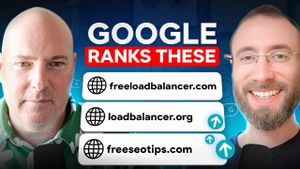
EMDs have never been easier (screenshot a page, have an assistant rebuild it as HTML, host it, link once and not from the footer); registration is a single point of failure everyone ignores, so run supplementary sites.
"work for our design team. It's never been easier to take a screenshot of"
— 2:30:01
Registration itself is a single point of failure nobody plans for, so supplementary sites exist to absorb it. Rebuilding a page as static markup and hosting it elsewhere has never been easier, and one link, not from the footer, is enough.
2:33:18 - The free keyword tip is that the slug and the title are the magic
The free keyword tip is that the magic is the slug and the page title, because keyword tools only hold terms that appear in ad auctions, so huge business-to-business search is invisible and whatever already ranks has solved the low-difficulty vector for you.
"I find whenever I go to buy a domain name and whether I'm"
— 2:33:18
Keyword tools only hold terms that appear in advertising auctions, so enormous business-to-business demand is invisible to them. When a link farm ranks and gets cited, copy its title and slug — it already solved the low-difficulty problem for you. The cheap and low-value modifiers are free ground for the same reason: brands avoid them and users type them, and the clicks can rank you for the flattering term anyway.
2:36:56 - Connecting the social channels may itself be dangerous
Connecting socials to Search Console may be dangerous, because the same video can hold the top spots across several social platforms at once — all owned by the same companies.
"the the number of keywords in those keyword planner tools in some industries is"
— 2:36:56
The same video can hold several top positions across social platforms owned by the same companies, and connecting the channels to one property makes that visible. Separate properties keep them unlinked, and paranoia is a good trait here.
2:39:57 - The engine is the vehicle rather than the destination
The engine is the vehicle, not the destination: it sends a platform on the order of a billion clicks a month, and may be surfacing that to show it is the connectivity between users and platforms — parasitic SEO likely boosted a platform's ads more than the platform did.
"reasons that Google was doing it was so I remember looking at LinkedIn's traffic"
— 2:39:57
It sends a platform something like a billion clicks a month, possibly to demonstrate that it is the connectivity between users and platforms. Parasitic work likely boosted one platform's advertising more than the platform managed itself — and the label is really reputation management under a harsher name.
2:42:49 - Emotion should not be picking the tools
Don't let emotion pick tools: paid data is not a scam — tools sell you data you cannot scrape yourself, and you cannot cornerstone without it except by stealing keywords from link sellers; global pricing is genuinely unfair to lower-income markets.
"everyone likes to say they're data driven. I think no one after watching this"
— 2:42:49
Paid data is not a scam: the tools sell data you cannot scrape, and cornerstoning without it means stealing keywords from link sellers. Use the free trials aggressively and let the output pay for the subscription.
2:47:11 - Starting from nothing means ranking the free surfaces first
Starting from nothing: skip the domain, rank free social surfaces (posts, threads, forum answers, video), build a network, offer services, earn a little, reinvest, then buy a site and a trial — lead with value and earn your stripes.
"But I think trying to to help let's actually reverse this. You said"
— 2:47:11
Free owned surfaces rank, so distribution can be bootstrapped before a cent is spent — ranking social posts and forum answers to earn the first small income. The preference stated alongside it is masterminds' radical candour over conferences.
2:52:28 - Contextual bridging starts from the basic strings
Contextual bridging: to tell the engine you are relevant for a topic, start with the basic strings ("what is a bet," "how does betting work") and build bridges from what you already rank for toward the terms you cannot yet reach.
"on the on the blogspot articles what you did was it just that"
— 2:52:28
Relevance is string similarity, so the bridge runs from ranked islands to unranked ones through the basic terms. A directory of follow links ranked instantly and then bridged via basic-term pages. If the bridge is too far it falls — go around it.
2:58:41 - Topical neighbourhoods join the dots faster than folders do
Topical neighbourhoods: pages in a cluster are related, and while a folder name does not feed the slug, building the neighbourhood ("what is / how does / how to learn X") joins the dots fast — learned by reverse-engineering.
"I think it was around 2007. So I I bought primary position.com in"
— 2:58:41
Pages in a cluster are related to each other, and while a folder name does not feed the slug, building the neighbourhood joins the dots quickly. It is learned by reverse-engineering rather than from documentation.
3:00:17 - Any market can be won, and most people start at the wrong end
You can win in any market — find the right terms to start and build up; most people start with the highest-volume terms and end with hundreds of non-ranking pages because they never planned the structure.
"Yeah. I think that's where you can win in almost any market like"
— 3:00:17
Any market can be won by finding the right terms to start from and building upward. Most people start at the highest-volume terms and finish with hundreds of pages that rank for nothing, because the structure was never planned.
3:01:09 - The job is architect rather than bricklayer
Be the architect, not the bricklayer: plan foundations, doors and windows (the enabling, ordered pieces) before building — cornerstoning means doing the enabling content first.
"always see like the way I would explain what you're brilliant at is I"
— 3:01:09
Plan the foundations, the doors and the windows before building. Cornerstoning means doing the enabling content first, in order, which is the difference between a site that compounds and a pile of pages.
Personal Branding Lessons
Three hours of received wisdom being checked against testing. The moves below are what the two of them actually do.
Ignore the best practices and run the test
The stance is stated at the top and everything after it follows: trust what your own testing shows over what the public conversation repeats. It is not contrarianism so much as a refusal to accept instructions nobody has verified, and the entire episode is an argument for that habit. 00:28
Give every question its own page when the competitive page will not rank
The document name carries the relevance — a page named after the exact question scores full marks on it — and with authority behind it a weak page can push established competitors out. It is the highest-leverage structural move available, and it works precisely where the obvious approach has failed. 1:08:00
Test the corollary rather than defending the idea
Defending markup, or authority, or any other position as an idea is what tribalism looks like in practice. Genuine work means changing the one variable and running it again. A daily team debate on any topic trains people to be proven wrong, which is the capacity the market actually rewards. 1:20:09
Refuse a single point of failure
Republish what is not working onto other platforms and force-index it, rewrite the winners for other sites, and track where every visit comes from. Domain registration itself is a single point of failure nobody plans for — one accidental setting dropped a first-position site to nothing for two weeks. 2:31:51
Copy the slug and the title of whatever already ranks
Keyword tools only hold terms that appear in advertising auctions, so enormous demand is invisible to them. When something ranks and gets cited — even a link farm — copy its title and its slug, because it has already solved the low-difficulty problem at its own expense. 2:33:18
Use the cheap modifier nobody else will touch
Brands avoid looking cheap and users search for it anyway, so cheap, cheapest and low-value modifiers face almost no competition. The clicks earned there can end up ranking you for the flattering term as well. It is free ground, left open by vanity rather than by difficulty. 2:35:10
Build bridges from what you already rank for
To establish relevance for a topic, start from the basic strings — what it is, how it works — and build bridges from the terms you already hold toward the ones you cannot yet reach. Everything has to stay topically relevant as you move up the tiers, because links now need clusters behind them. 2:52:28
Be the architect rather than the bricklayer
Plan the foundations, the doors and the windows before building anything. Cornerstoning means doing the enabling content first, in order. Most people start at the highest-volume terms and finish with hundreds of pages that rank for nothing, because the structure was never planned. 3:01:09
Questions
Each answer ends at the moment in the recording where it is given.
Is "good content" enough to rank, or is that a myth?
Quality alone is not the lever, because the engine cannot hold an objective standard across every subject — grammar and spelling do not equal good content, and nobody can define it neutrally. Content still matters as the package being delivered, but a strong site carries a weak page and distribution carries a strong one. The point is that publishing merit does not grow a site on its own. 17:23
Does the experience-authority-trust framework actually help my rankings?
Treated as a ranking factor, no. It is described as a genuinely useful internal training frame and as relevant to a narrow set of harmful queries, but the document people cite does not mention what they attribute to it, and any claim an author makes cannot be verified by a machine. Hundreds of sites rank with no author bio at all, so adding one to fix rankings targets the wrong thing. 21:21
Do I really need schema, and when?
Only where the engine reads structured fields instead of prose — job listings, flights, hotels — or to disambiguate a knowledge-panel identity. If every competitor already carries the same markup, it is not a differentiator. The one kind worth chasing is the sort that changes your click-through rate, such as review stars; stacking markup and calling it the number-one ranking factor does nothing. Use the fewest variables you can. 1:01:55
How do branded searches make my whole site rank better?
Navigational demand — people searching your name, or your name beside a topic — is a signal that lifts the whole site rather than one page. A very high click-through rate on a branded query dwarfs the fraction a contested term earns, which feeds authority. Building name recognition is a slower route into search than it looks, and it compounds the way attention accrues to the names people already recognise. 32:06
Can I still make a brand-new site rank, or does the engine only favour big brands?
You can, and directed demand is the fastest way in: a matching domain reached the top three for a target term within a day when partners searched a specific branded phrase. An established entity needs only a few thousand searches to bend suggestion, versus roughly ten times more for an unknown, so the early work is manufacturing recognition, not out-writing the giants. 39:02
Why did my rankings not move for months even though I did everything right?
Because a partial penalty or a heuristic trap can hold you until the next core update, which is a full rewrite of the web's scores. Good work can be invisible for months and then appear at a reset, while a declining site can look fine until it is hit. The lack of movement is often the trap, not failed effort — a stuck local maximum waiting on a reset. 1:30:03
How do I get cited in AI answers if I cannot run ads there?
Ranking is the entry ticket: you cannot buy placement in most assistants, so the fundamental to get cited is still search. Structure your answers as concise question-and-answer chunks matched to the questions people actually ask, because assistants lift small retrievable units into their answers. Video and clear chunking pull through consistently, which is why an organised video channel earns its place. 2:10:33
Is SEO dead now that AI answers are here?
No — interest in it is at an all-time high, because everyone now wants to be recommended inside AI answers and ranking is the only way in. Ad revenue rising quarter over quarter with the same user base is offered as proof the audience did not migrate. The engine is a business that makes money via ads, and search is still the right person with the right need at the right time. 2:05:10
How do I find keywords and judge domains without paying for expensive tools?
Copy the title and slug of a page that already ranks and is cited, because it has solved the low-competition vector for you. Mine an owned channel's search console for demand no planner lists, since planners cover a tiny fraction of real volume. And reach for the modifiers brands avoid — cheap, cheapest — where nobody is competing but people are searching. 2:33:18
Sources
James Dooley & David Quaid: The SEO “Best Practices” We Ignore
The sections above follow the episode's own order. Each timestamp is the point in the recording where the idea is discussed, so the post reads as a map of the conversation rather than a rearrangement of it.
This recording runs over two hours, so the map is drawn at a coarser grain than a shorter episode would need: each section covers several minutes of conversation rather than one turn of it.
Quotations come from the episode transcript with spoken filler ("okay", "right", "you know", "um", "actually", "kind of", "sort of") and false starts removed. No words are added: square brackets mark anything inserted for sense, and an ellipsis marks any cut. British spellings are restored, and speech-to-text errors were repaired against context only where the intended word is unambiguous. Where a line appears both in a cold-open teaser and in its place in the conversation, the timestamp cites the second — the point at which it is actually said.
Quotes are stamped with the moment they are said rather than with a speaker's name.