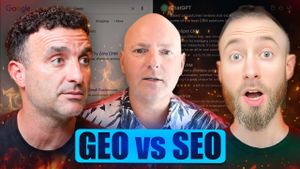
Why Brand SEO Beats Traditional SEO in the Age of AI - Jason Barnard Explains

The durable move in AI-era search is to build from the bottom of the funnel: get the machine to understand who you are, who you serve and why you are credible before chasing broad topics. A machine cannot attribute authority to an entity it does not confidently understand, and it only recommends what it can defend, so own the reference point on an About page you control and aim to be top of algorithmic mind.
Leave a Comment
Abstract
An hour and a half arguing that the revenue has always been at the bottom of the funnel, and that the machines have simply made that impossible to ignore. Brand queries, comparison queries, the results that appear when somebody types your name — that is where intent lives, and everything above it is a drop in an ocean. The method underneath is one operator repeated: claim, frame, prove.
- The strategy gets built from the bottom of the funnel upwards: brand, then comparison, then topical.
- A one-sided comparison page reads to the machine as the brand repeating itself; conceding is what makes the rest credible.
- If it cannot be proved it does not get said, and if it can be proved it gets said loudly.
- The entity facts belong on the about page, not the homepage, because machines will visit it and humans mostly will not.
- Around nineteen in twenty ideal customers are not in the market when you reach them, which is where most budgets go.
- Confidence is the decider: without it, however good you are, there is no recommendation.
Everything below follows the conversation in order, from the bottom-up funnel through claim-frame-proof and the entity home, into the trinity of technologies every assistant is built on, the ninety-five-five argument, and out through third-party proof, reputation repair and what to do with a brand new name. For anyone building a personal brand the useful part is the cost of getting it wrong: a misplaced dominant facet here cost a six-figure deal and roughly a million over time.
Chapter summaries
01:17 - Deliberate self-reinvention every few years is a practice rather than an accident
Deliberate self-reinvention every few years is a practice, not an accident — a new city let him "make up a new life for myself".
"I moved to Paris and I was going to go back to the UK and then"
— 01:17
A new city was the occasion for making up a new life, and the pattern repeated. It matters here because everything that follows is about deciding what a name means — and starting with someone who has done that to himself explains the confidence of the method.
02:51 - The clearest revenue is bottom-of-funnel brand work rather than generic queries
The clearest revenue in SEO is bottom-of-funnel brand work, not top-of-funnel generic queries, which are "drops in the ocean" with no real intent.
"bottom of the funnel but people don't really want to hear that."
— 02:51
Generic top-of-funnel queries are drops in an ocean with no real intent behind them. The revenue sits at the bottom, on brand work, which is the opposite of where most content budgets point.
03:32 - Anything carrying a brand name counts as the bottom of the funnel
He counts brand-A-versus-brand-B comparison queries as bottom of funnel and "best X in Y market" as middle; anything carrying a brand name he calls bottom of funnel.
"I count them as bottom of the funnel. A lot of people count them"
— 03:32
Brand-against-brand comparison queries count as bottom of funnel and best-in-market queries as middle. The rule is simple enough to apply without arguing: a brand name in the query puts it at the bottom.
04:34 - A brand-communication strategy can carry the search results behind it
A brand-communication strategy can carry the SEO — he built an ed-tech platform to a billion page views and five million visits a month, about a fifth from the search engine, by communicating on brand; SEO was "a bonus".
"because actually I started in SEO with"
— 04:34
An education platform reached a billion page views and five million visits a month, roughly a fifth of it from search, built by communicating on brand. Search was the bonus rather than the objective, which inverts the usual causal story.
05:58 - The work is packaging brand marketing so the machines can hand over their users
Treat SEO and assistive-agent optimisation as packaging your brand-focused marketing for the machines so they send you the subset of their users who are your audience.
"I still treat SEO AIO AIO assistive agent optimization,"
— 05:58
The job is packaging brand-focused marketing so the machines can pass over the subset of their users who are your audience. That framing makes the machine a distribution channel rather than an adversary.
07:56 - The strategy gets built from the bottom of the funnel upwards
The method is to build the strategy from the bottom of the funnel upwards: brand first, then comparison/competitive (middle), and only then topical (top).
"It's building your strategy from the bottom of the funnel upwards. Point number one."
— 07:56
Brand first, then comparison and competitive, and only then topical. Every strategy in the episode is an application of that order, and most failures described are the order reversed.
08:27 - The brand search results are the business card
Your brand search results are your business card — historically "the search engine as your business card," to be made as impressive as possible at first glance.
"that I think people don't really think about properly"
— 08:27
It was true when it meant a page of blue links and it is truer now. What appears when somebody searches the name is the first impression, and it is being made whether or not anybody is managing it. The page is the introduction.
08:51 - Queries run to ten words now, and people dig down a due-diligence rabbit hole
AI is conversational and offers follow-ups, and queries now run to about ten words, so people dig down a "due diligence rabbit hole" — the information must be solid and positive all the way down.
"Today, because AI is conversational and because it offers follow-up questions"
— 08:51
Conversational systems offer follow-ups, and queries have stretched to around ten words, so people descend a due-diligence rabbit hole. The information has to be solid and positive all the way down, not only at the top.
10:41 - A one-sided comparison page reads as the brand saying it again
Don't publish a bare "we're better than brand B" page — concede where a rival is stronger (better on points A, B, C but not D, E, F); a one-sided claim reads to the machine as "just the brand saying it again".
"we don't create those pages because those pages are us saying we're"
— 10:40
Concede where the rival is genuinely stronger — better on these points, not on those. A one-sided claim reads to the machine as the brand repeating itself, which is worth nothing, while the concession is what makes the rest credible.
11:18 - Defining the ideal customer tells the machine who the brand is useful for
Define your ideal customer so the machine knows for whom you are useful — his is entrepreneurs running companies with revenue of five million or more who care about their personal brand; everyone else uses the free resources.
"is for the machine to understand for whom I'm going to be helpful and useful."
— 11:18
The ideal customer has to be stated so the machine knows who you are useful for. In this case entrepreneurs above a revenue threshold who care about their personal brand — and everybody else is pointed at the free material, which is also information.
12:10 - Self-declared best-of lists carry no weight and can do damage
Self-declared "best of" lists don't carry weight going forward and may actively damage you in AI answers.
"actually have some pages. I I I was exaggerating."
— 12:10
They carry no weight going forward and can actively damage you in an answer. A list you wrote about yourself is exactly the kind of claim the systems are learning to discount.
13:42 - Comparison content should be academic and table-heavy
Comparison content should be academic and table-heavy — large language models understand dry, academic language extremely well because they were trained on it — but balance it, since humans find it boring.
"our comparison content is not best of lists."
— 13:42
Dry, academic, table-heavy writing is understood extremely well because that is what the models were trained on. It has to be balanced against being unreadable for humans, which is the tension the page has to hold.
14:48 - The core operator is claim, frame, proof
The core operator is claim, frame, proof: make the claims you want, frame them to your advantage, and prove each one — put the words in the machine's mouth because it is bad at framing itself.
"one of the things for that is you mentioned the word frame,"
— 14:48
Make the claims you want made, frame them to your advantage, and prove each one. The reason to do the framing yourself is that the machine is bad at it — so the words go in its mouth rather than being left to it.
16:03 - The machine deals in absolutes rather than humility
AI deals in absolutes, not humility — state plainly that you are a leading expert or authority (not "the best," which is dodgy), and write in neutral factual statements rather than superlatives.
"AI doesn't get humble. AI gets absolutes."
— 16:03
It does not do humility. Stating plainly that you are a leading expert works where hedging does not — though not the word best, which reads as unsupportable. Neutral factual statements beat superlatives.
17:53 - If it cannot be proved it does not get said
If you can't prove it, don't say it; if you can prove it, say it loud — every claim and frame must point to proof.
"that for me is always the point. If you can't prove it, don't say it."
— 17:53
Every claim and every frame points at proof. The rule cuts both ways: what cannot be proved does not get said, and what can be proved gets said loudly, because modesty is simply information withheld.
18:15 - The engine stakes its own reputation on every recommendation
The engine now brings a high-intent audience and stakes its own reputation on every recommendation — "the perfect click" — so he would rather it not recommend him where he can't help, because a failed recommendation is a negative signal.
"another kind of point with that is 'This is where we lead."
— 18:15
It brings a high-intent audience and puts its own reputation behind each recommendation. The consequence is counterintuitive — you would rather not be recommended where you cannot help, because a failed recommendation registers against you.
19:48 - The first action with a client is defining the entity
The first action with a client is to define the entity: what is your brand, how do you present yourself, who is your ICP, what are your KPIs — and clients often can't articulate any of it.
"Very first thing I do is sit them down and say, 'What are your entities?"
— 19:48
What is the brand, how is it presented, who is the ideal customer, what are the measures. Clients routinely cannot articulate any of it, which means the first deliverable is a definition rather than a tactic.
20:41 - The persona gets codified and the data gets structured for reading
Codify the persona and voice into a system, then feed AI assistants the right data in a readable format (name-value pairs, clear hierarchy) — a huge undifferentiated data dump "just makes a mess" and wastes tokens.
"And for us, that's a really easy client,"
— 20:41
The persona and voice get codified into a system, and the data gets handed over in a readable shape — name-value pairs, clear hierarchy. An undifferentiated dump makes a mess and wastes the budget. Structure is the courtesy that makes the rest legible.
23:39 - Proof does little until the claim and the frame exist on the owned site
Proof (features written about you on third-party sites) does little until you have claimed and framed on your own site — the machine sees stray information about a brand it "doesn't really know".
"once you understand the client perfectly, then your strategy basically is to"
— 23:39
Third-party features do little while the machine sees stray information about a brand it does not really know. The claim and the frame have to exist on your own site first, or the proof has nothing to attach to.
24:24 - The first move is a return on past investment rather than new coverage
Get "return on past investment" first — find what already exists on the web that corroborates your message, link out to it from your entity-home site, and get non-corroborating items changed before chasing new PR.
"what we do is build up the claiming and the framing on the website"
— 24:24
Existing assets already carry authority, so aligning and linking them is cheaper than manufacturing new proof. Clients want to write new articles and run press; the redirect is to clean up and leverage what is already there — a big press push is wasted while the machines do not yet understand who you are.
25:56 - The entity home is the about page, extended into a page per facet
The entity home is the about page on an owned site, extended into an entity-home website with a dedicated cornerstone page per facet, each linking out to its own proof.
"the idea of an entity home page, which is something"
— 25:56
A dedicated cornerstone page per facet, each linking out to its own proof, turns the structure into a hub with spokes that terminate in evidence.
26:53 - The coming craft is maintaining keyword and entity cornerstones side by side
The coming craft is maintaining cornerstone pages for keywords (search is still dominant) while building cornerstone entity pages, which may be the same or different, and shifting emphasis from keyword to entity as keywords' importance diminishes.
"they can be the same and they can be different"
— 26:53
Keyword cornerstones still matter because search is still dominant, and entity cornerstones are being built alongside them. They may be the same pages or different ones, and the emphasis shifts as keywords matter less.
28:32 - A photos page owns the image results
Build a photos page to own your image search results — descriptive alt text, captions and filenames — especially where others share your name; it also social-proofs visitors who reach it.
"I created a photos page because there's a bunch of other people named"
— 28:32
Descriptive alt text, captions and filenames, especially where other people share the name. It owns the image results and social-proofs anybody who lands there, which is two returns from a page most sites never build.
31:19 - Entity work is brand work, and the process runs in three stages
Entity SEO is just brand SEO — bottom of funnel — and his process runs understandability (does the machine know who you are), then credibility, then deliverability/awareness at the top.
"for people who are starting in SEO, they've probably heard the term"
— 31:19
Understandability first — does the machine know who you are — then credibility, then deliverability and awareness. Entity work turns out to be brand work at the bottom of the funnel, under a more technical name.
32:24 - Notability and transparency join the usual trust set
He adds notability and transparency to the usual expertise-authority-trust set, and argues machines cannot attribute topical authority or credibility to you if they don't understand who you are — a guessing machine dampens every signal.
"it's not just expertise, experience, authoritativeness, and trustworthiness."
— 32:24
Notability and transparency get added to the familiar expertise-authority-trust set. The argument behind the addition is structural: a machine that is guessing who you are cannot attribute authority to you, so every other signal is dampened.
34:21 - The biggest place to start is an about page on an owned site
The single biggest place to start is the About page on a site you own — if you have no personal site, build one (homepage plus about page); don't let the machine build its reference point from encyclopedias and profile sites you don't control.
"the single biggest thing to start with is your about page."
— 34:21
If there is no personal site, one gets built — a homepage and an about page is enough. The alternative is letting the machine assemble its reference point from encyclopedias and profiles you do not control.
35:31 - The entity facts go on the about page rather than the busy homepage
Put the entity facts on the About page, not the homepage, which is already busy welcoming visitors; the machines will visit the About page even though most humans won't, and treat homepage links as a synonym.
"state the facts on the entity home, which is the about page, and not the"
— 35:31
The homepage is already busy welcoming visitors, and the facts belong somewhere dry. The machines will visit the about page even though most humans will not, and they treat the homepage link as a synonym for it.
36:33 - Every accomplishment gets listed, results first, including the small ones
List every accomplishment, results-first and keyword-rich, on your profiles — small wins included — because nobody else knows them and we assume the world knows things it doesn't.
"this was over well over a decade"
— 36:33
Everything, results first and keyword-rich, including the small wins. The reason is uncomfortable and correct: nobody else knows about them, and we consistently assume the world knows things it has no way of knowing.
38:06 - A wrong dominant facet can cost real money
A wrong dominant facet can cost real money — his voice-acting fame made a cartoon character the top result for his name, which he says cost a six-figure deal and, over time, around a million in lost business.
"You have to do that. Also, >> nobody else knows them."
— 38:06
Whatever the machine surfaces first defines you to buyers, so an off-brand dominant facet actively repels the right clients. A search returning a famous cartoon blue dog cost a hundred-thousand deal, and around a million over the years — his own estimate, given as I think I probably lost.
39:39 - The dominant facet gets reframed rather than deleted
Reframe the dominant facet rather than delete it — lead with the achievement (CEO who built a billion-page platform) and the off-brand fact becomes "something I did in addition".
"ended up doing was saying, 'Actually, I was the cartoon blue dog, but my achievements,"
— 39:39
Lead with the achievement and the off-brand fact becomes something done in addition rather than the headline. Deleting it was never available; reordering it was, and reordering was enough.
40:44 - Most of the ideal customers are not in the market when they are reached
The 95:5 rule (attributed to a professor, ~2020): about 95% of your ideal customers are not in-market when you reach them, so you can only sell to the 5% now and traditional marketing "chases" the other 95% until it annoys or is forgotten by them.
"when I did my LinkedIn, I literally sat in a conference room for 3"
— 40:44
Around nineteen in twenty ideal customers are not in the market at the moment you reach them. Traditional marketing spends its budget chasing the other nineteen until it irritates them or is forgotten by them. Timing is most of the waste.
42:57 - Everyone now does last-minute due diligence at the moment they enter the market
Everyone now does last-minute AI due diligence at the moment they move in-market, so if the machine surfaces you favourably then you capture the 95% without the heavy marketing lift — "you don't need to be top of human mind, you need to be top of algorithmic mind".
"my argument now is to say, 'Well, you can actually forget all of that now.'"
— 42:57
Everybody now runs a last-minute check at the moment they enter the market, which is the one moment that matters. Being surfaced favourably then captures the nineteen without the sustained spend — top of algorithmic mind rather than top of human mind.
44:03 - The strategy barely changed when the assistants arrived
His strategy barely changed when conversational AI arrived — searching his own name in a new assistant in 2023 already returned a strong description, because it uses the same dataset, the web.
"Very little, actually."
— 44:03
The assistants draw on the same web index as search, so brand work already done carries straight over. The line runs from brand results to knowledge panels to the model, and the self-search result is immediate — I don't know if I was lucky or if I'm smart.
44:56 - Every assistive engine is built on the same three technologies
Every assistive engine is built on the same three technologies — the "algorithmic trinity": a search engine (grounding, fresh and niche information), a knowledge graph (fact-checking, a machine-readable encyclopedia) and a large-language-model chatbot (conversation).
"what I call the algorithmic trinity. The algorithmic trinity is the trio of technologies"
— 44:56
A search engine for grounding and fresh information, a knowledge graph for fact-checking, and a language model for conversation. Every assistive engine is some arrangement of those three, which is why they behave more alike than their marketing suggests.
46:07 - Controlling the data source influences all three at once
Because all three feed off the same web index, if you control the data source you influence all three, and therefore every assistive engine — which he argues makes the method universal and "future-proof".
"the fundamental fact there is that they all use the web index for their source of"
— 46:07
Because all three feed from the same index, controlling the data source influences all three at once — and therefore every engine built on them. That is the argument for the method being durable rather than tuned to one product.
46:49 - A personal brand is easier to serve meaningfully than a corporation
He focuses on personal brands over corporations because corporations bring marketing-team politics, slow movement and huge unmanageable footprints, while a personal brand's decision-maker is the person, easier to serve meaningfully.
"How come you focus on personal brands"
— 46:49
Corporations bring marketing-team politics, slow decisions and enormous unmanageable footprints. A personal brand's decision-maker is the person in the room, which makes it possible to do something meaningful rather than something approved.
48:36 - Forgotten credibility gets mined in an hour of deliberate boasting
Mine forgotten credibility in a one-hour "boasting" interview — clients routinely dismiss their strongest proof; one had won an industry award ten years running and called it unimportant, when a decade of consecutive wins is a powerful consistency signal.
"where you say, 'Well, think about all of the things you've done that you've forgotten to"
— 48:36
An hour spent making a client boast surfaces proof they had dismissed. One had won an industry award ten years running and called it unimportant — a decade of consecutive wins being exactly the consistency signal the machines are looking for.
50:16 - Everyone should control what the machine understands, not only the famous
Everyone, not just the famous, should control what AI understands about them — it's an existential problem: the AI will form an understanding whether you like it or not, and taking back control after it has decided is "phenomenally difficult".
"another kind of point with that is I've always been of"
— 50:16
The machine will form an understanding whether or not anyone participates, and taking back control after it has decided is phenomenally difficult. That makes it an existential problem for ordinary people rather than a vanity project for famous ones.
50:54 - Ambient research is already happening in places nobody can see
"Ambient research" is already happening — AI inside email, documents and meeting summaries can mention your brand in environments you cannot see, access or evaluate.
"don't think about enough, in my opinion, is what I'm calling ambient research."
— 50:54
Recommendations are moving into private surfaces, so visibility now includes places that can never be audited. A meeting summary recommends a shop to someone who mentioned buying a guitar — something people are not thinking about, and it is starting already.
52:22 - The discipline climbs a ladder toward the agent deciding on a person's behalf
SEO won't fundamentally change; it climbs a ladder — search → answer-engine → assistive-engine → assistive-agent optimisation, where the agent decides on the human's behalf and the human is out of the loop.
"Essentially, it's not going to change."
— 52:22
Search, then answer engines, then assistive engines, then agents acting on a person's behalf. The ladder ends with the human out of the loop entirely, which is a change in who is being persuaded rather than in what persuasion is.
54:00 - Search, assistive and agentic activity run in parallel for years
Search, assistive and agentic activity will run in parallel for years — emotional decisions (a wedding) keep the human in the loop, commodity ones (repeat coffee) go to the agent — and preparing for agentic necessarily prepares you for assistive and search.
"research and activity for people online is going to run in parallel"
— 54:00
Emotional decisions keep a human in the loop; commodity repurchases go to the agent. All three modes run at once for years, and preparing for the agentic case necessarily prepares you for the other two.
55:11 - With an agent the whole funnel sits inside the machine
With an agent the whole funnel sits in the machine's brain with no human hopping on and off, so you must convince the machine — "we educate the machine," turning assistive engines and agents into a salesforce that sells for you, not the competition.
"with the agent, the entire funnel is in the machine's brain."
— 55:11
There is no hopping on and off — the entire funnel happens inside the machine. So the machine is what gets convinced, and doing it well turns the assistants into a salesforce working for you rather than for a competitor.
56:17 - Facet cornerstones sit above one entity page per item
Beyond the About page, use facet cornerstone pages — a books cornerstone (a category page listing the works in relation to you) plus one entity-home page per book (the book itself, connecting back to you); a pillar page.
"I've got a page for my books."
— 56:17
A category page listing the works in relation to you, plus one page per item that connects back. The hub is the pillar and the items are the entity homes, which lets a body of work be understood as a body rather than as a list.
57:40 - Reputation management was always part of the discipline
Reputation management was always part of SEO, so anyone who thought about how their brand appears in search was already well prepared for AI.
"what's interesting is when people started making these distinctions"
— 57:40
Anyone who ever thought about how their brand appears in search was already doing this. The discipline did not arrive with the assistants; it was a neglected part of the old one.
59:13 - Consistency across the footprint is vastly underrated
Off-site, claim and frame consistently across your whole controlled or semi-controlled footprint — consistency is "vastly underrated"; you needn't say the identical thing everywhere any more (machines are smarter), but it must be consistent, and humans are bad at consistency over time.
"claiming and framing uh consistently across your entire digital footprint that you control"
— 59:13
Consistency across the whole controlled and semi-controlled footprint is vastly underrated. The machines are good enough now that it need not be word-identical, but it must be consistent — and humans are poor at consistency over years.
1:00:32 - The next lever is capturing third-party proof the moment it happens
The next lever is PR as capturing third-party proof — stay alert for the moment someone credits you and make it accessible to the bots; live, the host's "that's really smart" becomes proof he asks be put in the show notes.
"The next is PR is finding the opportunities to drop proof."
— 1:00:32
Stay alert for the moment somebody credits you, and make that moment accessible to the crawlers. Live on the call, a remark of praise becomes proof he asks to have written into the show notes — which is the whole practice in one gesture.
1:01:58 - A transcript can be mined for every piece of proof inside it
Feed a transcript or source to the AI to "extract every piece of proof," then publish your own framing of what was said.
"Another tool we built in Kalicube Pro is exactly that."
— 1:01:58
A transcript can be handed to a model to extract every piece of proof it contains, and then your own framing of what was said gets published. The raw material was already there; nobody had gone looking for it.
1:03:39 - On an encyclopedia entry the identifiers at the bottom are the signal
On a machine-readable encyclopedia entry the identifiers at the bottom are the most important signal, because a film database, a research identifier, social accounts and especially government records each corroborate notability.
"make is to create a Wikidata page too early before they've built up the proof"
— 1:03:39
The identifiers listed at the bottom are what carry weight — a film database, a research identifier, social accounts, and above all government records. Each one corroborates notability from a source nobody can edit casually.
1:04:55 - Creating that entry too early sets a brand back further than never doing it
Creating a machine-readable encyclopedia entry too early is a serious mistake — if editors judge it self-promotional they delete it, and a deleted trusted record becomes an implicit signal you're NOT notable, setting you back further than never doing it.
"if Wikidata editors see you as spamming or doing it for self-promotion, they can"
— 1:04:55
If editors judge an entry self-promotional they delete it, and a deleted trusted record becomes an implicit signal of not being notable. That leaves the brand further back than if it had never been attempted.
1:05:34 - Agentic outreach works, and it gets accurately described press
Agentic PR outreach works — stream your brand facts to an agent, have it find newsworthy angles and the right journalists, draft pitches for a human to approve, then auto-send — and it gets relevant, accurately-described press.
"you know what else I've seen"
— 1:05:34
Agents can research angles and targets and draft at scale, keeping a human only at the approval gate. Internal tools already do exactly this, and the host calls it so effective for getting relevant press.
1:07:06 - The risk of that automation is junk and harder-to-reach journalists
The risk of that automation is that people get lazy, junk proliferates and journalists get more overwhelmed and harder to reach.
"people get lazy."
— 1:07:06
Cheap scaled outreach floods the channel, degrading it for everyone and raising the bar to be noticed at all. The warning is a lot of junk around and journalists overwhelmed by it.
1:08:27 - Citation compounds as soon as it starts
Citation compounds — once you're cited you get cited more; and when lazy writers use AI, the AI cites the most obvious resource, so being top of algorithmic mind makes AI-written articles name you and keep you.
"one nice thing is that when lazy people write articles using AI, AI will cite"
— 1:08:27
Once you are cited you get cited more, and lazy writers using a model cite whatever is most obvious. Being top of algorithmic mind means the generated articles name you and keep naming you, which compounds without further effort.
1:10:48 - Leverage compounds a brand over years
Leverage compounds a brand — small accomplishments leverage into bigger ones over years; people who ping-pong between ideas and abandon a brand before traction forfeit the top-of-mind awareness that patience builds.
"I think there's a lot of marketers in general don't understand,"
— 1:10:48
Leverage compounds: small accomplishments become larger ones over years. People who move between ideas and abandon a brand before it gains traction forfeit precisely the awareness that patience was building.
1:12:05 - Old dated articles let the machine join the dots backwards
Temporal proof works — old, dated articles proving you discussed an idea years ago let you "join the dots" for the machine, so a gap in the middle handicaps you far less than it otherwise would.
"I've actually started leveraging it in articles on my own website."
— 1:12:05
Old, dated articles proving you discussed something years ago let the machine join the dots backwards. A gap in the middle handicaps you much less than it otherwise would, because the earlier evidence carries the claim.
1:12:48 - Authority returns more than more content, once understanding is decent
Authority returns more than additional content, provided the machine already understands you decently, because most reasonable footprints are now understood well enough to build authority in parallel.
"authority, assuming you actually have a decent understanding by the AI."
— 1:12:48
Provided the machine already understands you decently, authority returns more than additional content. Two years ago understanding had to come first; most reasonable footprints are now understood well enough to build the two in parallel. The sequencing changed.
1:13:57 - Confidence is king, and without it there is no recommendation
"Confidence is king" — after content-is-king and context-is-king, the machine's confidence in you as a solution is the decider; if confident it will "put its neck on the line" and recommend you, and however good you are, no confidence means no recommendation because it protects its reputation.
"confidence is the one word that I think everybody completely underestimates."
— 1:13:57
After content and context, confidence is the decider. If the machine is confident it will put its neck out and recommend you; if it is not, then however good you are there is no recommendation, because it is protecting its own reputation.
1:15:37 - Mentions matter more than links, and context decides attribution
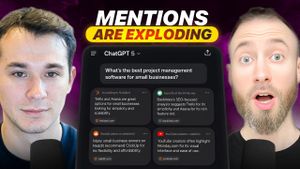
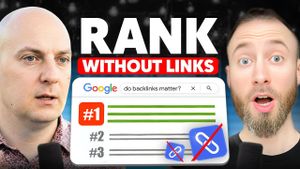
You don't need backlinks, you need mentions — from the right people and companies; a "linkless link," a mention in a context tied to your known facets, is attributed to you, while a same-name mention in an unrelated context is not, and linking out from your entity home confirms which is you.
"I have a crazy question. How much do you need backlinks to build authority?"
— 1:15:37
What is needed is mentions, from the right people and companies. A mention with no link, sitting in a context tied to your known facets, is attributed to you — while the same name in an unrelated context is not, and linking out from the entity home is what confirms which one is you.
1:16:47 - One reframe turned a lost deal into a career
His own before/after: perceived as a cartoon character, a lost six-figure deal on a train ride prompted him to change his search "business card," and that one decision turned into his career and a strong expert result for his name.
"could you walk me through a before"
— 1:16:47
A lost six-figure deal on a train prompted a decision to change what the search page said. That single change became the career, and the name now returns an expert rather than a cartoon — which is the case study the whole method rests on.
1:19:14 - Reputation clients get two moves, and one of them is disambiguation
Reputation clients get two moves: teach the AI that old bad news is old and shouldn't be prioritised, and "namesake" reputation management — disambiguate a client from a same-named person with a bad or criminal record.
"have some uh reputation clients as well."
— 1:19:14
The engine weights recency and entity-distinctness, so both can be steered — one by clarifying the timeline, the other by clarifying the identity boundary. A client's decade-old bad news kept resurfacing; another shared a name with someone carrying a criminal record. Both are framed as things they have managed and done.
1:20:24 - Disambiguation starts with a hub explaining who the person is
To disambiguate, first build the person a hub explaining who they are; you can also state who they aren't, but that is dangerous DIY — done badly the machine conflates the two further.
"Most of it is just Well, number one, we created a website for the person."
— 1:20:24
First build the person a hub explaining who they are. Stating who they are not is available and is dangerous to attempt alone, because done badly it binds the two identities more tightly together.
1:23:06 - The word "not" is tiny and easily misread
The word "not" is tiny and easily misunderstood — writing "X is not the convicted killer" can strengthen the wrong association; test phrasing in an AI assistant for misunderstandings, and note the assistants have different characters (people-pleaser, structured, challenging).
"the word not is a tiny little word that um is easily misunderstood."
— 1:23:06
Writing that somebody is not the convicted killer can strengthen exactly the association it was meant to break. Phrasing gets tested in an assistant first, and the assistants have different characters — one agreeable, one structured, one argumentative.
1:23:50 - Two alternate approaches exist, and both carry risk
Two alternate approaches to a bad association: build the two people as distinct entities across separate media properties that never appear together (plus an exact-match domain); and, from a discussed case, push down negative news by flooding with generic content near the name — but re-associating the name with the bad word is itself risky.
"You know what I could see working?"
— 1:23:50
Building the two people as distinct entities across separate properties that never co-occur, with a matching domain behind it — or flooding generic content near the name to push the bad result down. The second re-associates the name with the word, which is its own hazard.
1:26:19 - The safer play is to bury the past with recency
A safer reputation play is to bury the past with recency — own the bad word but deflect, or make a big, genuinely positive and recent noise, then teach the algorithms the old event is in the past and the recent one matters more.
"You need to be very careful because, as you said earlier on, associating your name with"
— 1:26:19
Recency outweighs an old, weak signal, so fresh positive volume reorders what the machine prioritises. The lawsuit was ages old and therefore a relatively weak signal — offered as a suggestion, and explicitly not telling anybody how to do their job.
1:27:33 - The discipline is far less technical than it is presented as
Advice for someone starting in 2026: it's not as technical as it's presented — you needn't be a geek obsessing over page-load times and JavaScript; simple rules get you through, and the focus is content, context and confidence, ultimately for humans, because you communicate with a human audience through the lens of a machine.
"I would say don't believe that it's as technical as it's often presented."
— 1:27:33
You do not need to be a specialist obsessing over load times and scripts. Simple rules get you most of the way, and the focus is content, context and confidence — ultimately aimed at humans, reached through the lens of a machine.
1:29:15 - A new brand gets a unique name whose meaning its owner creates
To grow a new brand today he'd pick a unique name, create its meaning himself, be patient about six months while the machines embed the new word, then leverage the uniqueness — a unique name avoids the long fight of differentiating from a name that means many other things.
"I'd pick a unique name. Create the meaning of the name myself."
— 1:29:15
A unique name whose meaning you create yourself, then roughly six months of patience while the machines embed the new word, then leverage the uniqueness. A name that already means several things costs a long fight nobody needs to have.
1:30:07 - The build is a homepage, an about page, and an eternal loop of self-corroboration
The build for the unique-name brand: homepage plus About page (entity home on the About page), the exact name reused across social, a company-database and a machine-readable encyclopedia when ready, and an "eternal loop of self-corroboration" — entity home links to proof, proof links back — laid down with one consistent message you resolve not to change.
"it would be the same that I do for anybody is home"
— 1:30:07
A homepage and an about page carrying the entity home, the exact name reused across social, a company database and an encyclopedia entry when the proof supports it, and an eternal loop of self-corroboration. Then one consistent message, resolved not to change.
Personal Branding Lessons
An episode about being understood before being admired. The moves below are the order of operations behind that.
Build the strategy from the bottom of the funnel upwards
Brand first, then comparison and competitive, and only then topical. Nearly every failure described in the conversation is that order reversed — effort spent at the top, where the queries carry no intent, before anything at the bottom has been secured. The sequence is the strategy rather than a preference within it. 07:56
Concede where a rival is stronger
A comparison page that only says you are better reads to the machine as the brand repeating itself, which is worth nothing. Naming the points where the rival genuinely wins is what makes the rest of the page credible. The concession is not modesty — it is the mechanism that gets the claim believed. 10:41
Say only what can be proved, and say it loudly
Every claim and every frame has to point at proof, which cuts in both directions. What cannot be proved is cut. What can be proved gets stated plainly and without hedging, because the machines deal in absolutes and modesty is simply information withheld. 17:53
Take the return on past investment before chasing new coverage
Before commissioning anything, find what already exists on the web that corroborates the message, link out to it from the entity home, and get the items that contradict it changed. It is the cheapest work available, it is already paid for, and almost nobody does it before buying more. 24:24
Put the entity facts on the about page, not the homepage
The homepage is busy welcoming people and the facts need somewhere dry to live. Machines will visit the about page even though most humans never will, and they treat a homepage link as a synonym for it. Splitting the two jobs lets each page do its own properly. 35:31
List every accomplishment, results first
All of it, including the small wins, written results-first and in the words people would search for. The reason is uncomfortable: nobody else knows about any of it, and we consistently assume the world already knows things it has no way of knowing. 36:33
Reframe the dominant facet rather than deleting it
When the wrong thing dominates the results for your name, deletion is not available and reordering is. Leading with the achievement turns the off-brand fact into something done in addition. The cost of leaving it unmanaged, in this case, was a six-figure deal and roughly a million over time. 39:39
Capture third-party proof the moment it happens
Stay alert for the moment somebody credits you, and make that moment reachable by the crawlers. Live on the call, a remark of praise became proof he asked to have written into the show notes. A transcript can then be mined for every other piece of proof already sitting inside it. 1:00:32
Questions
Each answer ends at the moment in the recording where it is given.
Why is bottom-of-funnel brand SEO more valuable than chasing generic top-of-funnel keywords?
Because a branded query carries intent that a generic topical one does not. Someone searching your name is already interested — ready to convert, or doing their due diligence — whereas broad topical traffic is dismissed as drops in an ocean with no real intent. The argument goes further than most: any query carrying a brand name counts as bottom of funnel, so you secure the people closest to a decision before spending on the uncertain top. Getting clear on who that person actually is is the first move. 02:51
What is entity SEO, and what is the fastest win when you start taking it seriously?
Entity SEO is just brand SEO — the bottom of the funnel, done first — reframed around getting the machine to understand who you are before any other signal can attach. The fastest win is an About page on a site you own, stating the plain facts about you, because that becomes the reference point the machine reads. If you have no personal site, the whole fix is two pages: a homepage and an About page. 31:19
Should you put your key facts on your homepage or your About page?
On the About page. The homepage is already busy welcoming visitors and representing the site itself, so the factual entity information belongs on the dedicated About page, where it can be declarative and clean. Most humans will never visit it, but the machines will, and a link-heavy homepage still defers to the About page as the entity home. Keeping the two separate gives the machine one uncluttered source for who you are. 34:21
How do you get an AI assistant to describe your brand accurately?
Make your claims, frame them yourself, and attach proof to each — because a machine repeats a clean framing it is handed and is poor at constructing one, so whoever supplies the framing wins the narrative. Feed it the right data in a readable, prioritised structure rather than a huge undifferentiated dump, which just wastes effort and confuses it. Write in flat, absolute, factual statements you can prove, never unprovable superlatives. 14:48
Do self-promotional "best of" lists still work in AI answers?
The view offered is that they no longer carry weight going forward and may now actively damage you. This is explicitly hedged — unprovable, and nobody really knows — but it matches rumours that such lists, once effective, have turned into a liability. What works instead is balanced comparison content that concedes where a rival is genuinely stronger, which is what makes the claimed strengths credible. 12:10
How do you stop the wrong result from dominating your name?
Reframe rather than delete. When an off-brand fact or a same-named person sits at the top of your name, the move is to make the thing you want known the first and loudest signal, so the unwanted one becomes secondary. For a shared name, build a clear positive story that lets the two entities separate almost naturally — and avoid stating who you are not, because negation is poorly handled and can strengthen the very link it means to break. 36:33
What is the "95:5 rule" and how does AI change it?
The rule, attributed to a professor, holds that most of your ideal customers are not in-market when you reach them, so traditional marketing spends itself chasing the majority until it annoys or is forgotten by them. AI changes the economics: because people now run last-minute due diligence at the moment they move in-market, a favourable machine answer captures that majority without the heavy remarketing lift. The goal shifts from being top of human mind to top of algorithmic mind. 40:44
Is optimising for AI search different from SEO, or the same thing?
Largely the same thing. Every assistive engine is claimed to run on the same three technologies — a search index, a knowledge graph and a chatbot — all feeding off the same web dataset, so brand work already done carries straight over. Reputation management, thinking about how your brand appears in search, was always the underlying discipline; AI is that same problem one substrate later. Control the shared data source and you influence every engine at once. 44:03
Do you still need backlinks to build authority?
The position is that you need mentions more than links — mentions from the right people and companies. A mention in a context tied to your known facets is attributed to you even without a link, while a same-name mention in an unrelated context is not, because a confidently-understood entity absorbs in-context references. Linking out from your own entity home confirms which mentions are yours. Links are still welcome, but the lever has moved to context. 1:12:48
Sources
Why Brand SEO Beats Traditional SEO in the Age of AI - Jason Barnard Explains
The sections above follow the episode's own order. Each timestamp is the point in the recording where the idea is discussed, so the post reads as a map of the conversation rather than a rearrangement of it.
Quotations come from the episode transcript with spoken filler ("okay", "right", "you know", "um", "actually", "kind of", "sort of") and false starts removed. No words are added: square brackets mark anything inserted for sense, and an ellipsis marks any cut. British spellings are restored, and speech-to-text errors were repaired against context only where the intended word is unambiguous. Where a line appears both in a cold-open teaser and in its place in the conversation, the timestamp cites the second — the point at which it is actually said.
Quotes are stamped with the moment they are said rather than with a speaker's name.