OpenAI Founder Breaks Down His Writing Process — Sam Altman

Writing is externalised thinking: the reason to write is to clarify your own mind, and clear communication is only a symptom of it. The highest-return hours go into choosing what to work on and grinding an idea down to its essence, tested by whether it survives on a single page. A language model belongs at the edges, a sparring partner and super-thesaurus, never the writer; judgement, taste and a human name are what hold their value.
Leave a Comment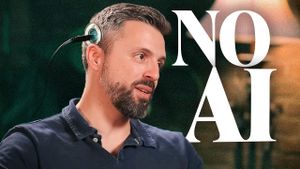







Abstract
Forty-seven minutes on writing as a thinking instrument rather than an output. The framing arrives in the first line and holds: the useful version of the tool is not one that expands your bullet points, it is one that helps you find things in the idea space you would not otherwise have reached.
- Clear communication is downstream of clear thinking, so unclear writing is a symptom rather than the disease.
- The highest-return effort goes into choosing what to work on, not into being marginally more productive.
- Compression is close to the secret of intelligence, and the mark of a good book is that it cannot be summarised.
- The best ideas start as almost-jokes and are extremely fragile; the valuable skill is a method for not killing them.
- The model is a sparring partner and a super-thesaurus — a bounded subtask, never the whole piece.
- A permanent note system invites curation, which is a different activity from thinking.
Everything below follows the conversation in order, from the idea-space framing through compression and selection, into what writing does to a plan, out through fragile ideas, the cutting exercise and the working rhythm, and finally to what survives whatever the tools become. For anyone building a personal brand the sharpest observation is the diagnostic one: people who could not express themselves clearly on paper did not run the company clearly either.
Chapter summaries
00:15 - The future of writing is a tool that helps discover things in the idea space
The future of writing is not a model expanding your bullet points; it is a tool that helps you discover new things in the idea space.
"I want to begin with how has knowledge o"
— 00:15
Not a model expanding your bullet points but a tool that helps you find things in the idea space you would not have reached. The distinction sets up everything else: assistance at the discovery end rather than the production end.
02:01 - Natural language becomes the interface, and text carries a rigour speech does not
Natural language becomes the interface to computers, and text carries a rigour that speech does not.
"I think words are going to be a huge part of how we c"
— 02:01
The second half is the one that matters for writing — speaking lets you get away with things the page will not. A sentence that only works aloud is carried by timing and tone, neither of which survives being typed out and read back cold.
04:00 - Outsourcing an essay misses the point of writing it
Outsourcing an essay to a model is not real writing and misses the point; the reason to write is to clarify your own thinking.
"that's not why people really write in the first place like the kind of writing"
— 04:00
The reason to write is to clarify your own thinking, so handing the essay over misses the point entirely. The output was never the point; the process that produced it was.
04:38 - The tool raises the returns to the first spark of an idea
The tool raises the returns to the initial seed of an idea — the moment of first spark.
"what I think of as raising the returns to is t"
— 04:38
That relocates where the human contribution matters: not in the elaboration, which is now cheap, but in the origination, which is not. It also changes what is worth practising, since the skill being automated is the one most training was built around.
05:06 - The tool amplifies whatever task it is given
The tool amplifies the task you bring it: a wrong task yields slop, a good question yields something better than anyone would alone.
"think I I've I you know I try to like watch people like very different"
— 05:06
Output quality is bounded by the quality of the prompt-as-question rather than by the tool. Two learners get watched: one had it write the whole essay, the other used it interactively to get unblocked and generate ideas. The first is named as a bad question — we are asking people to do the wrong thing.
08:49 - Compression is close to the secret of intelligence
Compression is close to the secret of intelligence, and the mark of a good book is that it cannot be summarised.
"and the I saw the enero on the wall"
— 08:49
The mark of a good book, on the same logic, is that it cannot be summarised. Both halves are usable tests rather than aphorisms.
10:03 - Releasing background anxiety is what lets new thoughts happen
Releasing background anxiety lets you think new thoughts; most people cannot even let themselves think the interesting thoughts, let alone say them.
"unclearly I thought it was really interesting in your conversation with Joe Hudson how you"
— 10:03
A running inner monologue and constant self-criticism make it hard to sit, focus and explore. The failure case is people who will not go far down an idea before worrying what others will think of them — the thought is stopped before it is finished.
11:38 - The highest return goes into choosing what to work on
The highest-return effort goes into choosing what to work on, not into being marginally more productive.
"I I I strongly agree that if you have a choice between spending some effort"
— 11:38
Choosing the work is the high-order bit, and a productivity method is a small multiplier on what may be the wrong thing. Talented, hard-working people spend little or no meaningful time deciding what to work on. It does not hold all the way: at some point you have to go and execute.
12:24 - Writing is thinking pushed outside the head
Writing is externalised thinking; for a hard or confusing problem there is nothing better than making yourself write it out.
"writing as a way to do that I I think of writing is sort of"
— 12:24
Forcing the thought onto the page is how the thinking actually gets done, so the page is the instrument rather than the output. Mostly for himself, then for private groups, publicly very rarely.
12:59 - Clear communication is downstream of clear thinking
Clear communication is much less important than, and downstream of, clear thinking; unclear communication is a symptom of unfocused thinking.
"what are the different parameters of clear communication there's sort of the sloganeering there is"
— 12:59
Once an idea has been reduced to why it is good and what the plan is, communicating it is not hard. Getting clear on the actual idea is the difficult part, and the wording is downstream of that.
16:34 - Writing a plan down beats letting it spitball in a meeting
Writing a plan down, rather than letting it spitball in a meeting, is often far more powerful.
"with the experiment because I learned that I can like write for myself to clarify"
— 16:34
The page forces a plan to be explicit where a meeting lets it stay loose. The discipline is self-imposed: writing out a new project's plan instead of talking it round a room.
17:19 - The rare communicator has both interesting things and interesting ways
The rare communicator pairs interesting things to say with interesting ways to say them; most people get only one.
"communication lessons that you've learned from Peter teal he is so distinct in the way"
— 17:19
Evocative, very short statements that stick come from thinking about the world in an unconstrained, original way, so the two halves are one skill seen twice. A mentor known for short statements that lodge in the brain was also a genuinely original thinker — and you are lucky to get either, let alone both.
19:19 - Ideas follow a power law rather than an average
Ideas are a power law: find what is working and go aggressively after it; the costly mistakes are the great things you didn't back.
"or C but the biggest mistake ever let's say was not investing in the series"
— 19:19
Find what is working and go aggressively after it. The costly mistakes are the great things that were not backed, rather than the poor things that were — which is the asymmetry a power law always produces.
19:42 - Really good ideas are rare enough to quadruple down on
Really good ideas are rare; when you find one, quadruple down and make it the only thing you push on.
"the really good ideas are rare and when you find one you should quadruple down"
— 19:42
Really good ideas are rare, so when one appears it becomes the only thing being pushed on. Quadrupling down is the stated response, and hedging is what the rarity makes expensive.
19:59 - Most business books carry three ideas across three hundred pages
Almost all business books are terrible because they carry three good ideas across three hundred pages; a reader wants the three ideas on one page.
"and I mean I think this is why like all business almost all business books"
— 19:59
Three good ideas spread across three hundred pages, when the reader wanted the three ideas on one. It is the most concise available diagnosis of an entire genre.
20:49 - Great writing and average business writing are different species
Great writing and average business writing are different species: clarity, precision, density, no posturing, nothing that feels fake.
"much Clarity Precision density yeah like if you go read average Business book versus pgs"
— 20:49
Clarity, precision, density, no posturing, nothing that feels fake. The list is short and every item on it is a subtraction rather than an addition.
21:07 - Writing gets an idea to its essence before the pitch
Writing gets an idea down to its essence before you ever pitch it, and it is dramatically different to be pitched by someone who did that work.
"time nothing feels fake MH pitching coming up with the story How does writing factor"
— 21:06
Being pitched by somebody who already got the idea down to its essence is dramatically different from being pitched by somebody who did not. Trying to make it clear on the page is what reveals it was never understood, and a single internally consistent page is where the weak points stop being hideable.
27:19 - Clarity of expression is rare, and its absence predicts failure
Clarity of expression is rare, and its absence predicts failure: people who couldn't express themselves clearly on paper didn't run the company clearly either.
"here in what ways did people's thinking reveal themselves through the writing of YC apps"
— 27:19
People who could not express themselves clearly on paper did not run the company clearly either. The correlation is offered as a predictor rather than a coincidence, which makes writing a diagnostic on somebody else's behalf.
28:11 - A founder's job is largely evangelist-in-chief
A founder's job is largely to be evangelist-in-chief, and you cannot evangelise effectively without clear communication.
"a founder or anyone leading any kind of company is is like evangelist and Chief"
— 28:11
Leading anything runs on getting people aligned, which runs on clear communication. So much of the founder role is framed as evangelism that the writing is not a side skill.
29:23 - The wish is for writing to be higher-volume and lower-stakes
The wish is to make writing higher-volume and lower-stakes — to drop the activation energy so a long piece becomes something you do in fifteen spare minutes.
"too what is something that you're excited to do with your writing with GPT that"
— 29:22
High activation energy — the right mood, hours of uninterrupted focus — is what keeps writing rare, and lowering it is what would raise the volume. A ten-page thing still feels like a huge task to sit down for, and he has not figured out how to change that.
31:11 - The best hope is that the tool lets people think what they could not
The best hope for the tool is that it lets people think ideas they couldn't have and be more creative than before.
"for more than anything else out of"
— 31:11
Creativity is limited less by skill than by the ability to think of the idea, and the tool lifts that limit rather than the execution one. The arc of technology has been expanding the realm of what a person can do — and you still have to be a great curator.
32:47 - The best ideas start as almost-jokes and are extremely fragile
The best ideas start as almost-jokes — somewhat ridiculous — and are extremely fragile; the high-value skill is a method for not killing them.
"it right like it all of these things sort of start as these like almost"
— 32:47
They start as almost-jokes, somewhat ridiculous, and they are extremely fragile. The high-value skill is a method for not killing them — and the specific toxicity to avoid is the person smart enough to explain why every great idea is bad.
33:53 - Writing for an audience of one sharpens what thinking alone cannot
Writing just for yourself clarifies and sharpens vague ideas in a way careful thinking in your head cannot.
"into this the thing that is most important to me personally about writing is like"
— 33:53
Careful thinking in your head does not do the same job. The audience is irrelevant to the mechanism, which is why the private version still works.
34:52 - A written plan makes weak ideas visibly fall away
Writing a plan out makes weak ideas visibly make no sense and fall away; circulating the draft gives others the same black-and-white reckoning.
"intermediate stages where it was like talk to like a bunch of people uh have"
— 34:52
Weak ideas become visibly nonsensical once written out, and they fall away on their own. Circulating the draft gives everybody else the same black-and-white reckoning at once.
36:14 - Compression is the measure of progress
Compression is the measure of progress: the same plan document rewritten over years from twenty-five pages to fifteen to four to nearly half a page.
"sense and now as you do annual planning and you think in one maybe three"
— 36:14
As understanding sharpens, the same content needs fewer words, so the shrinking is itself the signal. A recurring our plan document got shorter every time it was rewritten.
37:17 - The valuable skills become ideas, taste and knowing what is wanted
As the tool does more, the valuable skills become having great ideas, knowing what you want, taste, and expert-level creation.
"to go as you think about how AI is going to change writing"
— 37:17
When the tool can do anything, the scarce inputs are judgement and direction rather than execution. Ideas, taste and knowing what is wanted are the three named as rising in value.
37:43 - The model is a sparring partner rather than a writer
The model is a sparring partner and a super-thesaurus, not a writer: give it a bounded subtask, never the whole piece.
"love using chat gbt to help me write something um especially like as I've been"
— 37:43
A sparring partner and a super-thesaurus. Give it a bounded subtask and never the whole piece — which is a rule about scope rather than about capability.
38:35 - A cutting exercise exposes whether there was ever a story
A cutting exercise exposes whether there was ever a story: cut a metaphor per page and an unnecessary word per sentence until ten pages become one.
"we should be training writers differently"
— 38:35
Stripping the decoration reveals the structure, or reveals that there was none. Beginners' overwritten first pages get cut down and are then found to contain no story at all — and readers want a story.
40:53 - Beautiful prose and a good story are separable
Drop the perfect-setup ritual: take any eleven uninterrupted minutes, and reserve the long quiet block only for a long piece.
"right and you're thinking about creating a focus state what is it that you're doing"
— 40:53
A mass-market hit can pair a compelling story with poor writing, which is uncomfortable and true. The two skills are traded independently and only one of them sells.
42:03 - The ritual of the perfect setup gets dropped
The productive rhythm alternates exposure and solitude — being among people and ideas, then long quiet time alone to think and write.
"but figuring out like the right amount of being with people talking you know getting"
— 42:03
Take any eleven uninterrupted minutes rather than waiting for the right conditions. The long quiet block gets reserved for a long piece, and whether talking or typing is more generative is personal enough to dictate the tool.
43:00 - The productive rhythm alternates exposure and solitude
An effective note system is deliberately disposable: a spiral pad you can rip pages from and lay flat, good paper, pocket-sized, filled and discarded.
"you take notes during the week that you reflect on or is it just your"
— 43:00
Exposure then solitude — being among people and ideas, then long quiet time alone to think and write. The alternation is the productive unit rather than either half.
44:46 - An effective note system is deliberately disposable
Even as text becomes the input to video, music and images, writing stays a tool for thinking and people should still learn it.
"the competence with the written word is going up so much"
— 44:46
A spiral pad you can rip pages from and lay flat, good paper, pocket-sized, filled and discarded. The disposability is deliberate: a permanent system invites curation, which is a different activity from thinking.
45:43 - Writing stays a tool for thinking whatever else changes
There is no evidence the tool is killing writing; it would take full superintelligence, and by then there would be bigger concerns.
"with is there's just a lot of people out there who are saying that AI"
— 45:43
Even as text becomes the input to video, music and images, writing remains a tool for thinking and people should still learn it. The reason to learn it survives the change in what it produces.
46:24 - There is no evidence the tool is killing writing
The most-read novel of the near future will still carry a human name, because the reader's connection is to a person.
"happened um let's say we have a system that can write better than a human"
— 46:24
No evidence the tool is killing writing; it would take full superintelligence, and by then there would be bigger concerns. The most-read novel of the near future will still carry a human name, because the reader's connection is to a person.
Personal Branding Lessons
A conversation about thinking with a pen. The moves below are the working half.
Put the effort into choosing what to work on
The return on selection dwarfs the return on execution, and almost all self-improvement effort goes to the second. Given the choice between spending time picking the right problem and spending it being marginally faster on the wrong one, the first wins by a wide margin. 11:38
Write the plan down rather than spitballing it
A plan written out is often far more powerful than the same plan discussed in a meeting. The medium forces a completeness that conversation lets everybody skip, and the gaps that survive a discussion do not survive a page. 16:34
Quadruple down on a really good idea
Genuinely good ideas are rare, so when one shows up it becomes the only thing being pushed on. The costly mistakes are the great things that were not backed rather than the poor things that were — which is what a power law always does to hedging. 19:42
Make the idea short enough to fit in one screenshot
A forcing constraint rather than a formatting preference: if it cannot be sent in a single phone screenshot, it has not been reduced far enough. The limit does the arguing that would otherwise have to happen with yourself. 23:27
Get to the essence by removing rather than untangling
The process is grinding down, not unknotting. That distinction changes what the work feels like — there is nothing to solve, only material to take away, and anything that matters gets made by cutting. 23:56
Give the model a bounded subtask, never the whole piece
A sparring partner and a super-thesaurus. The rule is about scope rather than capability: handing over a defined piece of work is useful, and handing over the whole thing removes the part that was doing you good. 37:43
Take any eleven uninterrupted minutes
Drop the ritual of the perfect setup. Eleven uninterrupted minutes is enough for most of it, and the long quiet block gets reserved for the pieces that genuinely need one — which are fewer than the ritual implies. 40:53
Keep the notebook disposable
A spiral pad you can tear pages from and lay flat, good paper, pocket-sized, filled and thrown away. The disposability is the point: a permanent system invites curation, and curation is a different activity from thinking. 43:00
Questions
Each answer ends at the moment in the recording where it is given.
Should I let a language model write for me, or does that miss the point of writing?
If the value of writing is the thinking it forces, then handing the whole piece to a model removes the value along with the effort; the output is passable and empty. The distinction drawn is between using a tool to skip the work and using it to reach thinking you could not reach alone. Writing to clarify your own mind is the part worth keeping, and it is exactly the part a wholesale draft throws away. 04:00
What is writing actually for if I am not trying to become a writer?
It is externalised thinking. The recommended move for any hard or confusing problem is to sit down and make yourself write it out, because forcing a thought onto the page is how the thinking gets finished. On this account the point is never the artefact and never an identity as a writer; it is that a muddled idea becomes a clear one only once you have to state it plainly and stare at what you wrote. 12:24
Why is my communication unclear even when I know the material?
Because clear communication is downstream of clear thinking, and unclear communication is usually a symptom of thinking that has not yet been focused. Once an idea is reduced to why it is good and what the plan is, saying it clearly stops being hard. The reflex to polish the wording treats the surface as the problem when the real fault sits upstream, in an idea you have not yet gotten clear on. A mission statement worth compressing starts there. 12:59
How do I decide what to work on instead of just being more productive?
Set a very high bar for any new productivity method, and put the effort into the prior question instead. Choosing what to work on is described as the high-order bit, the thing that most determines the return, and yet even very capable people were seen spending almost no meaningful time on it. The caveat is that at some point deliberation ends and execution has to take over, but the choice comes first and deserves real hours. Start from the gap worth occupying. 11:38
How do I stop killing my own good ideas before they grow?
Treat early ideas as fragile, because the best ones tend to look somewhat ridiculous before they look obvious. The named hazard is the person clever enough to explain why every great idea is bad; early on the main job is simply not to accidentally kill something with that cleverness. Build a protected space and a process for a new idea to develop before you subject it to the objections that would have strangled it in its first week. 32:47
How do I actually get an idea down to its essence?
By removing rather than untangling. The image offered is grinding down rocks: let many slightly different versions of an idea bang against each other and the right core is what remains. A one-page summary is the test, and conversation is the generative front end, but the essence is reached alone in front of a page that has to hold together. If you cannot write it down cleanly, you did not understand it, which is information, not failure. A tight positioning statement is the same discipline. 22:20
How should I use a language model in my writing without it replacing my thinking?
Give it a bounded subtask and never the ideas. The described use is a super-thesaurus: one stubborn sentence, ten alternative words, and a human choice among them. It is a sparring partner and a collaborator you can hand a small defined job, but it is not a writer and is not close to replacing the work of coming up with ideas. The boundary holds as long as what you hand over is small and what you keep is the judgement. 37:43
How do I build a writing habit when I never feel ready?
Drop the perfect-setup ritual. The old routine of a specific cafe, a set time, and headphones was replaced by taking any eleven uninterrupted minutes available, in the back of a car or lying in bed, with the long quiet block reserved only for genuinely long pieces. Waiting for ideal conditions is what keeps the writing from ever happening. Lower the activation energy and let a durable publishing habit run on found time. 40:53
Will a language model make writing a worthless skill to learn?
No, on the argument offered. There is a lot of bad machine text and a lot of machine-written student work, but that is noise rather than the death of serious writing; no serious writer is treated as fearing for the craft. Only full superintelligence would change the verdict, and by then there would be far larger concerns. Writing stays worth learning the way coding is, for the thinking it teaches, which outlasts the job it was learned for. 45:43
Sources
OpenAI Founder Breaks Down His Writing Process — Sam Altman
The sections above follow the episode's own order. Each timestamp is the point in the recording where the idea is discussed, so the post reads as a map of the conversation rather than a rearrangement of it.
Quotations come from the episode transcript with spoken filler ("okay", "right", "you know", "um", "actually", "kind of", "sort of") and false starts removed. No words are added: square brackets mark anything inserted for sense, and an ellipsis marks any cut. British spellings are restored, and speech-to-text errors were repaired against context only where the intended word is unambiguous. Where a line appears both in a cold-open teaser and in its place in the conversation, the timestamp cites the second — the point at which it is actually said.
Quotes are stamped with the moment they are said rather than with a speaker's name.