Good Content Is a Myth, and What UFC and SEO Have in Common - Episode 109

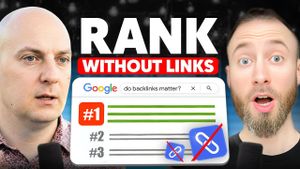
Good content is a myth for rankings, because content cannot be good or bad in the first place — good is a subjective judgement no machine can make. A search engine cannot read merit, so it counts popularity instead, treating authority earned through backlinks as a proxy for quality. Ranking is an authority contest, not a writing contest, and the four things that decide it are no penalties, content, relevancy and authority. An industry sells the opposite because its income depends on it.
Leave a Comment






Abstract
Half an hour arguing that there is no such thing as good content — not that good content fails to rank, but that the category itself does not exist in any form a machine could act on. The argument is structural rather than empirical, and the second half of the episode leaves search entirely to explain why a demonstrably wrong belief survives: a combat-sports league created to settle which martial art actually worked, and what happened to the people whose schools lost.
- Good is subjective, and popular is not the same as good — a song is not good because it topped the charts.
- A result that ranks can be flatly wrong, which proves ranking is a measurement rather than an endorsement.
- A program asked to judge a song cannot read the song, so it counts downloads — and an engine does the same thing with links.
- The rare cases where content appears to rank alone are borrowed authority, not earned quality.
- Two reasons the belief persists among people selling content services: ego, and livelihood.
- A few months studying backlinks will outrank somebody who spent years writing well.
Everything below follows the episode in order, through the dismantling of the category, the proxy argument, the martial-arts detour, and out to the four requirements. For anyone building a personal brand the transferable part is the last move: ask what the person telling you something has to protect, and notice when the answer is nothing.
Chapter summaries
00:40 - There is no such thing as good content, and that belief is the core error
There is no such thing as good content; the belief that quality content ranks is the core error.
"Grumpy today because people think that there is such thing as good content."
— 00:40
The belief that quality content ranks is named as the core error of the field rather than as a difference of emphasis. Everything in the episode is an attempt to dismantle it, and the argument is structural rather than empirical: not that good content does not rank, but that the category itself does not exist in any form a machine could act on.
03:03 - Authority is what actually works, or at least the biggest part of it
The thing that actually works is authority, not content — "authority is king, or at least the biggest part of the deal".
"It works. That's why I teach it. I teach it because it works."
— 03:03
What actually works is authority. The claim is given with a hedge attached — authority is king, or at least the biggest part of it — and the reason offered for teaching it is that it works rather than that it is fashionable. Authority is the variable the whole field is avoiding.
04:26 - Quality of content is not a ranking factor at all
Quality of content is not a ranking factor, and once you accept content cannot be good or bad you see ranking cannot be directly influenced by content quality.
"The point of this episode is to help you understand that there is."
— 04:26
Quality of content is not a ranking factor, and the episode's purpose is to get a listener to accept that content cannot be good or bad in the first place. The second half of that is the load-bearing part: once the category collapses, the ranking claim has nothing left to stand on.
05:08 - Good is subjective, and popular is not the same as good
Good is subjective: a song is not good because it is popular or number one on the charts, and content is the same.
"I want to talk about songs. Like a song."
— 05:08
Popularity, downloads and chart position measure how many people wanted a thing and never whether it is good. Songs, chart positions, and a painting one person calls good and another does not are the three cases offered.
06:15 - Content can be correct or incorrect, and most searches are not for facts
Content can be correct or incorrect, and correct content is good — but most searches are not for facts, and opinions and editorials cannot be good or bad.
"Now let's talk about content for a second. Content can be correct."
— 06:15
Content can be correct or incorrect, and correct content is good in the one sense the word survives. But most searches are not for facts, so the axis that would be judgeable is the axis that rarely applies.
06:56 - A result that ranks can be flatly wrong, so ranking is not an endorsement
A result that ranks can be flatly wrong or simply not what you wanted, which proves ranking is not a verdict on quality.
"Here's an example. So let me ask."
— 06:56
Ranking is therefore not an endorsement. Content has many real axes — correct, helpful, relevant, popular — and good is not one a machine can read off any of them.
08:28 - A program asked to judge a song would count downloads instead
Asked to write a program that decides whether a song is good, you cannot read the song — so you would count downloads and treat them as a proxy.
"Look, I've mentioned this before, but I think this is a good."
— 08:28
Asked to write a program deciding whether a song is good, you cannot read the song. So you would count downloads. The thought experiment is the whole argument in miniature: faced with an unjudgeable quality, you substitute a countable proxy and hope it correlates.
09:39 - A search engine cannot read quality either, so it uses a proxy
A search engine likewise cannot read content for quality, and since it can tell only topic and relevancy it uses authority, meaning good backlinks, as its proxy for good.
"Now let's think about search engines for a second. Search engines can't read."
— 09:39
A search engine is in the same position. It cannot read content for quality; it can tell topic and relevancy, so it uses a proxy — and the proxy is how many other sites vouched for the page. The count stands in for the judgement nobody can make.
10:52 - Good content ranking by itself cannot possibly be true
Because a search engine cannot detect quality, "good content ranks by itself" cannot possibly be true — it has to work through authority instead.
"Works. So all these people that are telling you that good content somehow."
— 10:52
The claimed mechanism requires a capability the machine does not have, and the actual mechanism is the only one available to it. The people teaching content-is-king are described as telling you something mechanically impossible.
12:56 - Nobody who has done this for six months still believes content is king
Nobody who has genuinely done SEO for more than six months can still believe content is king, because their clients never rank from content alone.
"SEO. Many people who are teaching SEO don't have any experience doing SEO."
— 12:56
Six months of clients failing to rank on content is enough disconfirming evidence for anyone actually practising. Everyone starts at write good content and rank because it is the first thing heard, and it fails — which is why those still selling it after that are lying or scamming rather than merely mistaken.
13:22 - The rare cases are borrowed authority rather than earned quality
The rare cases where content does rank are borrowed authority, not earned quality: very small competition, or an already-authoritative domain.
"Way that anyone has ever written really good content and somehow ranked with."
— 13:22
The rare cases where content does appear to rank on its own are borrowed authority rather than earned quality — a very small competitive field, or a site already carrying weight from elsewhere. The exception proves the rule in the original sense: it is the case where the missing variable was quietly supplied.
14:14 - Practitioners know authority is real and are intimidated by it
Many practitioners know authority is real but are intimidated by it and unwilling to change their business model, because building a private blog portfolio costs real money and months of work.
"So I actually think like this is."
— 14:14
Many practitioners know authority is real and are intimidated by it, unwilling to rebuild a business around the part that is hard. That is a more generous explanation than dishonesty and a more troubling one, because it predicts the belief will persist among people who know better.
15:30 - On-site factors block ranking, and content quality almost never does
In almost no case is content quality the reason a page is not ranking; on-site factors can block ranking, but quality is not one of them.
"Many websites have good content. I would say that in most cases."
— 15:30
On-site factors can genuinely block a page, and those are worth checking — but they are a different category of problem from the writing. Check the blockers before rewriting anything.
16:39 - A challenged belief gets defended rather than investigated
When a belief is challenged, people double down rather than investigate — especially when the belief is a threat to their livelihood.
"Anyway, look, when somebody — here's the thing. When."
— 16:39
The reflex is strongest where the belief pays the bills: investigating it honestly risks finding out that the work of several years rested on nothing. The observation is offered as a general one, and the next twelve minutes are a worked example from an entirely different field.
17:22 - A combat-sports league was created to find out what actually worked
A combat-sports league was created to find the best martial art, and one grappling discipline consistently won — yet the losing stylists made excuses instead of adopting it.
"So this reminds me of Ultimate Fighting Championship when it."
— 17:22
A combat-sports league was created to find out what actually worked, and one grappling discipline consistently won. The analogy is doing real work: it is a controlled contest in a domain where everyone had strong prior beliefs, and the result was not up for interpretation.
19:05 - The first reason for the denial is ego
The first reason for the denial is ego: a lifetime believing you are great because you never faced someone who knew what they were doing, then losing when you finally did.
"Actually was the best. So I want to talk a little bit."
— 19:05
The first reason for the denial is ego: a lifetime spent believing you are excellent because you never faced a real test, and then facing one. That is a hard thing to accept about any practice, and it is harder when the practice is the thing you are known for.
20:05 - Livelihood is the second reason for the denial
Livelihood is the second reason, because many of the losers ran their own schools and telling students to switch styles means losing the business, so the winners get called frauds and the contest rigged.
"So that's part one. Part two is a lot of these people."
— 20:05
The second reason is livelihood. Many of the losers ran their own schools, and telling students to go and train somewhere else is not a decision about evidence — it is a decision about income. The two reasons compound rather than compete.
21:43 - Content sellers do exactly the same with their own customers
Content sellers do exactly the same: with paying customers and students, admitting authority works loses respect and income, so they double down and reframe authority as manipulation or "black hat".
"Anyway, let's talk about SEO for a second. If you've been teaching."
— 21:43
Content sellers do exactly the same thing: with paying customers and students already enrolled, admitting that authority is what works costs money. The parallel is laid out without softening, and it is the reason the episode spends so long on a martial-arts story.
22:38 - A teacher with no product to protect has no reason to lie
A teacher with no product to protect has no reason to lie: he says quality is not a ranking factor because it is not, and would say the opposite if that were true.
"Of content is not a ranking factor because it's not. And if."
— 22:38
A teacher with nothing to sell has no reason to lie. He says quality is not a ranking factor because it is not, and the absence of a product to protect is offered as the reason to believe him rather than as a virtue. It is the strongest move in the episode because it is checkable.
24:40 - A few months studying backlinks outranks years of high-quality writing
A few months of studying backlinks will let you outrank someone who has written high-quality content for years, because backlinks are a ranking factor and quality is not.
"Let's talk about SEO again. If you understand backlinks, if you understand."
— 24:40
Effort spent on the actual lever compounds and effort spent on a non-lever does not, however long it runs. The parallel drawn is a beginner in the winning grappling discipline beating a year-trained traditional stylist — the probable outcome rather than a guarantee, since anything can happen in a single case.
26:10 - Content is king was taken wildly out of context
"Content is king" was taken wildly out of context; it never meant that writing good content makes you rank.
"Anyway, this made sense to me. I don't know if it actually."
— 26:10
The misreading has organised two decades of practice, which is a reasonable claim for how far a phrase can travel without its original argument attached.
27:56 - Four things are needed to rank, and all four are needed rather than three
Four things are needed to rank, and you need all four, not three: no penalties (the top priority), content (any content, quality irrelevant), relevancy, and authority.
"Podcast. You might want to start with the episodes called the four."
— 27:56
Ranking is gated by each in turn: a penalty blocks everything, content and anchor text set relevancy, and backlinks set authority. Relevancy is determined by the content plus the anchor text and source of the backlinks — and three of the four is not enough.
30:11 - Content cannot be good or bad, so it cannot be a ranking factor
To close the loop: content cannot be good or bad, so it cannot be a ranking factor; authority is, and authority is basically a popularity contest a search engine is forced to trust.
"But I don't know. I don't know what else to say."
— 30:11
A program cannot judge a song but can measure its popularity, and popular gets assumed good — which is exactly the assumption a search engine makes about authority. Authority is not the ultimate marker of good content, of course not, and it is all the engine has.
Personal Branding Lessons
An argument about search that spends its middle third on martial arts, because the interesting question is not what is true but why a disproved belief survives.
Stop treating content quality as a lever the engine can pull
Quality of content is not a ranking factor, and the reason is not that the engine undervalues it — the reason is that quality is not a property a machine can read. Once you accept that content cannot be good or bad in any machine-readable sense, the ranking claim has nothing left to stand on. Write well for the reader, and stop expecting a position in return. 04:26
Separate popular from good, and correct from good
A song is not good because it is number one; popularity measures how many people chose it, which is a different thing from merit. Content can be correct or incorrect, and correct content is good in the one sense the word survives — but most searches are not for facts, so the axis that would be judgeable rarely applies. Both confusions are worth catching in your own thinking, not just in other people's. 05:08
Read a ranking as a measurement rather than as an endorsement
A result that ranks can be flatly wrong, or simply not what you wanted. That single observation settles it: if the top result can be incorrect, the ranking is not a verdict on quality. Content has many real axes — correct, helpful, relevant, popular — and none of them is the one people mean when they say good. 06:56
Ask what proxy a machine would have to use
Asked to write a program that decides whether a song is good, you cannot read the song. So you count downloads. A search engine is in exactly that position: it can tell topic and relevancy, and for quality it needs a stand-in — how many other sites vouched for the page. Whenever something seems to be judged by a machine, ask what countable thing is standing in for the judgement. 08:28
Check the on-site blockers before blaming the writing
In almost no case is content quality the reason a page is not ranking. On-site factors can genuinely block a page and are worth checking — they are just a different category of problem from the prose. The instinct to rewrite is strong because rewriting feels like work; the blockers are cheaper to check and far more likely to be the cause. 15:30
Investigate a challenged belief instead of defending it
When a belief is challenged, people double down rather than look — especially when the belief is load-bearing for their income. That is the general claim, and the martial-arts story is the worked example: a controlled contest in a field full of confident practitioners, producing a result that was not open to interpretation, and a great many people who declined to accept it. 16:39
Ask what the person telling you has to protect
Two reasons the denial persists: ego, and livelihood. The people whose schools lost had students enrolled, and telling them to train elsewhere was a decision about income rather than evidence. Content sellers are in the same position. The corollary is the useful one — a teacher with no product to protect has no reason to lie, which makes the absence of something to sell a reason to listen. 21:43
Spend a few months on backlinks rather than years on prose
A few months of studying links will let you outrank somebody who has spent years writing high-quality content. The comparison is deliberately unfair-sounding and it is the practical form of the whole argument: the effort goes where the variable is. Content still has to exist — it is one of the four requirements — it just has to exist rather than be good. 24:40
Questions
Each answer ends at the moment in the recording where it is given.
Does writing better content actually improve my search rankings?
Not on its own, by this account. The core claim is that quality is not a ranking factor at all, because content cannot be good or bad in any way a machine could read — good is a subjective judgement, and a search engine cannot make one. Polishing already-adequate writing therefore chases diminishing returns on the wrong variable; the movement comes from authority, not from a sharper sentence. 04:26
Can a search engine tell whether my content is any good?
No. A search engine can read what a page is about and what it is relevant for, but it cannot judge merit any more than a program could listen to a song and hold an opinion. So it substitutes something countable: authority, built from backlinks, the way a music program would count downloads. Popularity stands in for quality because quality itself is not measurable. 09:39
If content quality is not a ranking factor, what actually makes a page rank?
Four things, and you need all four rather than three. First, no penalties — the top priority, because a penalty blocks everything else. Second, the presence of content, regardless of how good it is. Third, relevance, set by that content together with the anchor text and source of your backlinks. Fourth, authority, which comes from those backlinks. Quality appears nowhere on the list. 27:56
What is website authority, and why does it seem to matter more than content?
Authority is, in plain terms, popularity a search engine can count: when many sites link to a page, that is read as evidence the page is worth pointing to, and therefore probably decent. Because merit cannot be measured directly, this stand-in does the deciding. It matters more than content precisely because it is the thing the machine can actually see, and links from others compound into it over time. 10:01
Why do so many SEO experts insist that content is king?
Because a great many of them sell content. Courses, agencies and consultants have customers, students and income riding on the belief, so admitting authority is the real lever would cost them respect and revenue. When the claim is challenged, the cheaper move is to double down and to recast the rival method as manipulation, rather than to rebuild the business around a harder, slower truth. 21:43
Why do content agencies keep failing to move my rankings?
Because the thing they deliver — more writing — is not the thing that ranks a page. The recurring story is agency after agency producing content while nothing changes, until effort shifts to authority and rank finally moves. Most sites already have adequate content, so adding polish addresses a constraint that was never binding. The money buys output, and output is not the lever. 11:57
When does good content actually rank on its own?
In two narrow cases, and neither is really about the writing. One is very small competition, where almost anything can surface. The other is an already-authoritative domain, where new pages inherit the standing the site has already built — the ranking traces to the domain, not the prose. This is why starting on a low-competition niche or an established platform can look like a content win when it is not. 13:22
Is it faster to learn backlinks or to keep improving my writing?
Faster to learn backlinks, by the argument given: a couple of months spent on the lever that actually decides rank can outperform years spent on writing that does not. Effort on the real mechanism compounds; effort on the decorative one does not, however long it runs. The honest hedge is that any single case can go differently — this is the probable outcome, not a promise — but the advantage sits with the compounding input. 24:40
What did "content is king" originally mean?
Not that good writing makes you rank. The phrase is granted as reasonable but taken far out of context, then stretched — perhaps deliberately — into the claim that quality drives rankings, which it was never saying. A memorable slogan was rebuilt into a false mechanism and sold on. Understanding the saying and rejecting the misreading of it are treated as two different things. 26:10
How do I know which SEO teacher to trust?
Check what their advice protects. A source selling nothing loses nothing by reporting what actually works, so its account is cheap to trust; a source with courses and customers has income tied to a particular belief and will defend it. The test is whether the person would lose money by admitting they were wrong, and aligned incentives are what make guidance believable. 22:38
Sources
Good Content Is a Myth, and What UFC and SEO Have in Common - Episode 109
The sections above follow the episode's own order. Each timestamp is the point in the recording where the idea is discussed, so the post reads as a map of the conversation rather than a rearrangement of it.
Quotations come from the episode transcript with spoken filler ("okay", "right", "you know", "um", "actually", "kind of", "sort of") and false starts removed. No words are added: square brackets mark anything inserted for sense, and an ellipsis marks any cut. British spellings are restored, and speech-to-text errors were repaired against context only where the intended word is unambiguous. Where a line appears both in a cold-open teaser and in its place in the conversation, the timestamp cites the second — the point at which it is actually said.
Quotes are stamped with the moment they are said rather than with a speaker's name.