The First Rule of Internal Linking (That Most SEOs Ignore)

Internal links are not free authority you spray at whatever you most want ranked; a link only passes value when the page carrying it already ranks and earns clicks. So internal linking is a monthly rebalancing act, not a build finished once: use the pages already ranking as authority sources, channel that earned authority into pages that should rank, then move the links again as the picture shifts. Leave a settled winner alone, and keep one link so nothing orphans.
Leave a Comment

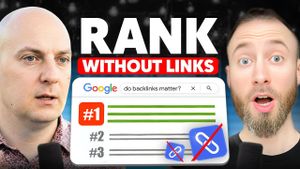





Abstract
Twenty-five minutes that reframe internal linking from a site-architecture decision into an ongoing allocation. The rule at the top is that internal links should be changed monthly, and never touching them is the failure. Everything after it follows from one correction: a link from a page that does not rank does nothing, which removes the justification for most automated internal linking in a single line.
- A page with no authority falls into a diluted crawl pool, and a sitemap does not get it crawled.
- Internal links are an expense account rather than free authority — every link out of a page spends something.
- A page that ranks and holds its clicks generates authority by itself, which is what makes this available to a site with no links.
- Cornerstoning is the name for it: the source is a page you already own that is already working.
- Topical authority is a per-topic array rather than one number for the domain.
- Sending links to a page that cannot rank is malinvestment, and the check takes a day.
Everything below follows the conversation in order, through the crawl-pool correction, the expense-account model, cornerstoning and dampening, into measurement, and out to a short defence of the channel. For anyone building a personal brand the transferable part is the accounting: links are a budget you already hold, and most people spend it from accounts that are empty.
Chapter summaries
00:00 - The first rule of internal linking is that links get changed monthly
The first rule of internal linking is that links should be changed monthly; if you never tweak them you are doing it wrong.
"You wrote, first rule of internal linking club for SEO. Your internal."
— 00:00
Internal links are not set once and forgotten. The rule stated at the top is that they should be changed monthly, and never tweaking them is named as the failure — which reframes internal linking from a site-architecture decision into an ongoing allocation.
00:23 - Automating internal links is dangerous, and the sitemap myth is where the error starts
Automating internal linking is dangerous, and much of the error stems from the "search-engine spider" fairy tale — people assume the crawler reads your sitemap and immediately crawls all the URLs.
"So yeah, I'm glad you picked up on this."
— 00:23
Automating internal linking is dangerous, and most of the error traces to a belief that a sitemap gets a page crawled. It does not. The myth is load-bearing for a lot of bad practice, which is why it gets dealt with first.
01:03 - A page with no authority falls into a diluted crawl pool
A page with no authority goes into a diluted crawl pool; crawling is triage across several pools, and the lower the pool the more pages each bot must cover.
"If that page has no authority, it's going into a diluted pool."
— 01:03
Crawling is triage across several pools rather than a queue, and where a page lands is decided by what it already has rather than by what it was submitted in.
01:24 - A link from a page that does not rank does nothing
The belief that linking pages out "helps the search engine understand your site" is false; if the linking blog posts are not themselves ranking, their links do no good.
"And I think people think that you're supposed to."
— 01:24
A link from a page that does not rank does nothing. The belief that linking pages out helps the engine understand your site is named as false, which removes the justification for most automated internal linking in one line. A link is a transfer, and an empty account transfers nothing.
02:08 - A blog post has to rank before its links can help a target page
Blog posts must rank before their links can help a target page; the standard operating process is to keep asking "what am I linking to, and does it still need this?" — treat each link as an expense.
"So if you're building blog posts and you want those."
— 02:08
A blog post has to rank before its links can help a target page — that is the operating procedure rather than an optimisation. It also inverts the usual order: the supporting content is built to rank in its own right, and only afterwards is it asked to carry anything.
03:17 - Internal links are an expense account rather than free authority
People ask how many links is "too many before it gets spammy" because they think internal links are free authority — they are not, and fifty links on a page is a safe bet it is not helping.
"This idea that — a lot of people also ask like."
— 03:17
People ask how many internal links are too many before it looks spammy, and the question assumes links are free authority. They are an expense account: every link out of a page spends something. Ranking a page that gets no traffic is close to worthless — even a private network needs its pages to actually receive visits.
04:21 - Being indexed is not enough for a link to pass equity
The rule is observed rather than explicit from the original link-authority patent, so it does not always apply; being indexed no longer means a page passes link authority.
"It's not an explicit rule from the original patent. It's an."
— 04:21
Being indexed is not enough for a link to pass equity. The rule is observed rather than explicit — not stated in the original patent — and it is flagged as such rather than asserted, which is the same evidentiary care the pillar keeps rewarding.
05:06 - The safest bet is to chase pages that already have traffic
The safest bet is to chase pages that already have traffic, including through partners; the first rule of link building is to always monitor what you are linking to.
"I think the safest bet, and that's why when we did."
— 05:06
Partners count as well as your own pages. Traffic is the observable proxy for everything else here, and unlike authority it can be read without a tool.
05:48 - A page that ranks and holds its clicks generates authority by itself
A page that ranks and gets good clicks (no pogo-sticking) generates authority by itself — no backlink needed — and you channel that authority through internal links to a page that should rank, then repeat.
"All right. So the idea is, when a page ranks and."
— 05:48
A page that ranks and holds its clicks — no return to the results — generates authority by itself. The authority is earned rather than acquired, which is what makes this route available to a site with no links at all.
07:16 - Cornerstoning is the name for authority earned rather than acquired
The name for this is cornerstoning — modern-day link authority for people who need authority.
"Yeah, that's corner stoning at its heart."
— 07:16
Cornerstoning is the name for it: authority for people who need authority and cannot buy it. The term matters because it separates this from link building — the source is a page you already own that is already working.
08:32 - Links into one page dampen as they multiply, so the flow turns outward
Bringing links into one page has a dampening effect, so once it ranks you link outward; but in a competitive, high-rotation space be careful not to strip authority and "break the circuit" — you take a beachhead, then rank the next thing.
"Back to the podcast. I like to think of — remember the."
— 08:32
Bringing links into one page has a dampening effect, so once it ranks the flow turns outward. Pages will not all rank at once, so the higher-traffic ones lift the weaker ones, and the weaker ones eventually point at the page that converts.
10:23 - When to stop swapping links is decided case by case
When to stop swapping links is case-by-case: more searches mean more rotation testing, recalculated at every "auction," so you can undermine a page by meddling.
"So the more searches there are, the more rotation testing happens."
— 10:23
When to stop swapping links is decided case by case: more searches mean more rotation testing, and the testing itself is a signal about how settled a position is. It is one of the few places in the episode where the answer is explicitly not a rule.
11:30 - Topical authority is tracked through sub-reports and grouped keywords
Track topical authority through sub-reports and grouped keywords; a spread across positions signals it is developing, and many keywords in the top two positions means you own the topic.
"A good way is sub-reports, right? And grouping keywords."
— 11:30
Topical authority is tracked through sub-reports and grouped keywords rather than through a single figure. A spread across positions tells you something a single average cannot.
12:35 - An average position of one on sixty impressions can mislead
A misleading signal: an "average position of 1 on 60 impressions" looks great, but there may be thousands of impressions where you rise then fall so far you stop being counted.
"One of the confusing data signals you can get is where you."
— 12:35
An average position of one on sixty impressions looks excellent and can be hiding almost nothing. The example is given as a confusing data signal rather than as an error — the number is correct and the reading of it is wrong.
13:44 - Topical authority is a per-topic score rather than one number
Think of topical authority as a per-topic score: the old single link-authority number is now better imagined as each topic and subtopic carrying its own authority figure.
"So topical authority is the — so the old number just used."
— 13:44
Topical authority is a per-topic score rather than one number for the domain. The old single figure has been replaced by an array, which is why a site can be strong in one area and invisible in the next. Authority is local rather than global.
14:42 - An orphan page can rank and keep ranking once it has been discovered
Orphan pages can rank and keep ranking; once a page has been discovered, a link is not strictly required to hold its position.
"That's a really good question. I have seen orphan pages rank."
— 14:42
An orphan page can rank and keep ranking. Once a page has been discovered, a link is not strictly required to hold the position — which complicates the tidy model and is stated anyway.
15:14 - Navigation and footer links are heavily devalued
Navigation and footer links are heavily devalued (their value comes only from brute force); for in-body links the rule of thumb is to limit them to about five per page.
"And I mean, for example, like if you've got."
— 15:14
Navigation and footer links are heavily devalued, and whatever value they retain comes from brute repetition rather than from meaning. The consequence is that in-body links are the ones worth rationing.
16:40 - Sending links to a page that cannot rank is malinvestment
Sending internal links to pages that cannot rank is malinvestment; the fix is a same-day hack that needs no new content.
"So if let's say you've got a page and you're."
— 16:40
A local agency ranking locally that puts up a high-difficulty national post with few backlinks will not move it, so the links belong elsewhere. In the performance console, the pages tab filtered to positions above seven over the last seven days shows what is close and needs only a little more authority — a Connecticut web-design term at ninety-two per cent difficulty with about ten backlinks is the counter-case. Use seven days rather than ninety: too many peaks shift the average.
18:42 - The engine measures the reaction to content rather than its quality
SEO is the marriage of content to authority; the belief that the search engine can assess content quality is only partly true — it can verify facts but not opinion, observation, ideology or philosophy.
"Exactly. It's like the game of Civilization. You build your."
— 18:42
The engine measures the reaction to content rather than its quality, which is the same conclusion the whole pillar keeps reaching from different directions. What follows is a short defence of the channel: it is mostly relevance plus authority plus avoiding spam, people scapegoat it the way they scapegoat marketing generally, and it has been one of the larger democratisers of access to information.
22:02 - Some veterans keep their affection for the channel by treating it as a simple machine
Why some veterans keep their love for the channel: treat the engine as "a simple machine," and do not resent it if you never built and then lost a fortune on it.
"I think one is, I recognise it for as."
— 22:02
Treating the engine as a simple machine is offered as the temperament that keeps a veteran interested in it. It is not a technical claim — it is a description of how to work on something adversarial for a decade without resenting it.
22:38 - Good content is not enough, and two failure modes follow from expecting it to be
Two failure modes in how people relate to the engine: blaming it for treating their own tactics as spam, and assuming a right to traffic; the maxim "write good content and they will come" is elitist and unhelpful.
"Yeah, and I do empathise greatly with that and sympathise."
— 22:38
Good content is not enough, and two failure modes follow from expecting it to be: blaming the engine for treating your tactics as tactics, and assuming quality alone should have been rewarded. The closing note is why any of this is worth explaining — people resent being told links still matter, and the people telling them did not design the machine.
Personal Branding Lessons
An episode about internal links that is really about allocation: what you already own, what it is actually worth, and where spending it does something.
Change the internal links monthly rather than setting them once
The first rule is that internal links get changed, and never tweaking them is the failure being named. That turns internal linking from a structural decision made once at build time into a monthly allocation of something you already hold. None of the allocation that follows is possible until the links are treated as movable. 00:00
Link only from pages that already rank
A link from a page that does not rank does nothing. The widely held belief that linking pages out helps the engine understand your site is named as false, which removes the justification for almost all automated internal linking. It also inverts the usual build order: supporting content is made to rank in its own right first, and only afterwards asked to carry anything. 01:24
Treat every internal link as a spend that must be justified
People ask how many internal links are too many before it looks spammy, and the question assumes links are free. They are an expense account — every link out of a page spends something that page holds. Ranking a page that gets no traffic is close to worthless, and a page with no authority falls into a diluted crawl pool regardless of what your sitemap says. 03:17
Chase the pages that already have traffic
The safest bet is to work with pages that already receive visits, including on partner sites. Traffic is the observable proxy for everything else in this model and it needs no tool to read. Being indexed is not enough for a link to pass equity — that rule is observed rather than published, and it is flagged as such rather than asserted. 05:06
Use a ranking page with satisfied clicks as the source
A page that ranks and holds its clicks — nobody returning to the results — is generating authority on its own. That authority is earned rather than acquired, which is exactly why this route is available to a site with no links at all. Cornerstoning is the name for it, and the distinction from link building matters: the source is something you already own and that is already working. 05:48
Turn the flow outward once a page has ranked
Bringing links into one page has a dampening effect as they multiply, so once it ranks the direction reverses. Pages will not all rank at once, so the higher-traffic ones lift the weaker ones, and the weaker ones eventually point at the page that actually converts. The sequence matters more than the count. 08:32
Track authority per topic rather than as one number
Topical authority is an array rather than a single domain figure, which is why a site can be strong in one area and invisible in the next. Track it through sub-reports and grouped keywords. And read the numbers carefully — an average position of one on sixty impressions looks excellent and can be hiding almost nothing. 13:44
Stop sending links to a page that cannot rank
Sending internal links to a page with no prospect of ranking is malinvestment: the spend goes somewhere that cannot convert it. The fix is a same-day check on whether the target is within striking distance before the link is made at all. Navigation and footer links are heavily devalued anyway, so the in-body links are the ones worth rationing. 16:40
Questions
Each answer ends at the moment in the recording where it is given.
How often should you change your internal links?
Often enough that they keep pointing at what can use them, which is framed as roughly monthly. The reasoning is that pages rise and fall, so a link map left untouched slowly channels authority toward pages that no longer need it and away from ones that do. Internal linking is treated as a live, recurring practice rather than a build you finish once, since a map fitted perfectly to last month cannot adapt when the pages shift, and never revisiting it is named as the core mistake. 00:00
Do internal links from pages that are not ranking actually help?
No. Authority flows only from a page that already has some, so a link from a page that does not itself rank passes nothing along, however many of them you point at a target. The image offered is an account you cannot draw on until money has actually landed; chasing pages that already return clicks is the safer route than betting on ones that might. 01:24
How many internal links per page is too many?
The question is treated as the wrong one, because it assumes links are free authority to be rationed only against a spam limit. They are not: if they were, everyone would rank for everything. The rule of thumb given is about five in-body links per page, trimmed toward two on very low-authority sites, and a page carrying fifty links is described as a safe sign it is not helping itself at all — more options past a point producing doubt rather than value. 03:17
Does a page just need to be indexed to pass link authority?
No, and this is flagged as observed behaviour rather than documented mechanism, so it is not claimed to hold in every case. A high site-wide authority score counts for nothing on a specific page that draws no traffic, and a page that is not even indexed sends nothing. The takeaway is to route through pages and partners that already have an audience rather than ones that merely exist in the index. 04:21
What is cornerstoning in SEO?
It is the name for the whole method: use pages that already rank and hold their clicks as sources of authority, and interlink them toward pages that should rank, repeating as each new page rises. A ranking page with good clicks is said to generate authority on its own, no backlink required, and that earned authority is what gets channelled onward. Naming the pattern is what turns rank-first-then-redistribute into a deliberate order of operations — a compounding route to being treated as the authority on a topic. 07:16
How do you know when to stop swapping your internal links out?
Case by case, read from how much the page is still moving. More searches mean more re-testing, so meddling with a settled page can undermine it. A steady average position of one across three months is described as probably safe to leave alone; an average around 3.3 signals a page still oscillating below the fold that needs more authority, not more tinkering. A settled winner is best left untouched while the effort goes into new pages. 10:23
How do you keep an eye on your topical authority?
Through grouped keywords and sub-reports rather than any single headline figure. A spread across positions — some at one, some at five, some further down — signals a topic still developing, while a cluster of keywords in the top two positions signals ownership of it. Top-level impressions and click-through are dismissed as meaningless, because click-through only means anything measured per keyword per page, and a flattering average can hide a page that keeps crashing out of the results — the distinction between looking present and actually owning a topic. 11:30
Can an orphan page still rank?
Reportedly yes — orphan pages have been observed to rank and keep ranking, though the point is hedged as untested. The reasoning is that a main purpose of interlinking is discovery, and once a page has been discovered a link is no longer strictly required to hold its position. The exception named is a rotation phase in a competitive space, which could change the picture, so the safer habit is still to keep at least one link pointing at anything you want held. 14:42
How many in-body links should a page have?
About five is the rule of thumb, and this applies to in-body links specifically — navigation and footer links are treated as heavily devalued. Five posts give up to twenty-five links, which very low-authority sites should trim toward two. When trimming links off a page that is now ranking, at least one path in is kept — the least authoritative page still linking to it — so the page does not become an orphan and drop out. 15:14
What are striking-distance keywords and how do internal links win them?
They are the pages already ranking just below the top of the results — close enough that a little more authority tips them over. The move is to filter the performance console to the last seven days, not ninety, and surface pages above roughly position seven, then route internal links to them. Because they are already near the top of the results, the win needs no new content and can land within days. 16:40
Sources
The First Rule of Internal Linking (That Most SEOs Ignore)
The sections above follow the episode's own order. Each timestamp is the point in the recording where the idea is discussed, so the post reads as a map of the conversation rather than a rearrangement of it.
Quotations come from the episode transcript with spoken filler ("okay", "right", "you know", "um", "actually", "kind of", "sort of") and false starts removed. No words are added: square brackets mark anything inserted for sense, and an ellipsis marks any cut. British spellings are restored, and speech-to-text errors were repaired against context only where the intended word is unambiguous. Where a line appears both in a cold-open teaser and in its place in the conversation, the timestamp cites the second — the point at which it is actually said.
Quotes are stamped with the moment they are said rather than with a speaker's name.