SEO Ranking Factors - Episode 127

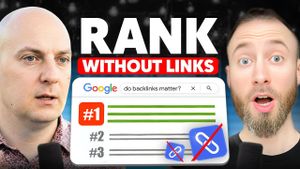
A ranking factor is anything the search engine uses to set your position, and it passes one test: change it, and if your position moves it counts, and if it does not, it is noise. Most of what the field sells and argues about fails that test. The discipline reduces to a single question asked of every tactic — does this move my rank? — and to four things that pass it, in order: avoid penalties, have content, have relevancy, and build authority last.
Leave a Comment






Abstract
Twenty-three minutes triggered by a forum post — somebody asking how to fix falling impressions, and getting an answer that addressed neither the metric nor the cause. The argument underneath is a definition: a ranking factor is anything the engine uses to decide position, and the test is causal. Change the thing; if position moves it is a factor, and if it does not it is not, whatever else it does for a reader.
- The discipline has exactly one purpose, and a large share of what practitioners do is not even the discipline.
- An impression counts appearances in the results and has nothing to do with clicks.
- Traffic is a function of two variables only — position and monthly search volume — so a demand fall is not a problem the work can fix.
- The much-promoted quality framework is named directly as a non-factor, with the engine's own documentation cited rather than asserted.
- Loading speed, dwell time, design and user experience all fail the same causal test.
- Four factors are worth bothering with, in a priority order, and authority is last, dearest and decisive.
Everything below follows the episode in order, from the definition through the impressions confusion, into the list of things that do not work, and out to the four that do. For anyone building a personal brand the transferable part is the filter: one question asked of every proposed tactic, and the willingness to name what fails it.
Chapter summaries
00:41 - A ranking factor is what the engine uses to decide position, tested causally
A ranking factor is anything the search engine uses to decide where to rank you; the test is causal — if changing it changes your position, it is a factor, and if it does not, it is not.
"A ranking factor is anything that the search engine uses to know where."
— 02:09
A large share of the field is confused about the concept itself, and that confusion is the reason for the episode. The definition is causal rather than descriptive: if changing the thing moves your position it is a factor, and if it does not it is not — whatever else it does for a reader.
02:34 - The discipline has exactly one purpose, and it is not web design
The discipline has exactly one purpose — get sites to the top of the search engine — and it is not web design, content writing, or conversion optimisation.
"The purpose of SEO is to get websites to the."
— 02:34
A single goal lets every activity be judged against it rather than pursued for its own sake. The purpose is restated four times against three things it is not, which is how much repetition the confusion apparently needs.
03:53 - Much of what practitioners do has no effect on position at all
A lot of what practitioners do is not even the discipline, because it has no effect on position.
"Sure why people miss that point, but a lot of what people do."
— 03:53
The claim lands harder than it reads: it is not that the work is bad, it is that it belongs to a different job that happens to be done by the same person.
04:43 - An impression counts appearances in the results and has nothing to do with clicks
An impression is a count of times your site appears in the results, and it has nothing to do with clicks.
"What are impressions? An impression is a time."
— 04:43
The definition is laid out slowly because the confusion it causes runs through the rest of the episode — impressions get read as traffic, and they are not.
05:23 - Falling impressions have two possible causes, and only one of them is yours
Falling impressions have two possible causes — your rank dropped, or total monthly searches fell — and only the rank drop is a problem the discipline can fix.
"If your impression — now, hopefully you guys already understand what the problem."
— 05:23
A demand decline lowers appearances regardless of position, so it is not a ranking failure and cannot be fixed like one. Being pushed off page one lowers impressions; so does a fall in monthly searches — and both can be true at once.
07:12 - Traffic is a function of two variables: position and monthly search volume
Traffic is a function of two variables only — your ranking position and monthly search volume — and the top position takes roughly a third of the clicks.
"Really quickly, traffic is a function of two things. Your position, meaning what."
— 07:12
Position sets your share of the demand and demand sets the pool that share is taken from. First position is roughly thirty per cent, so ten thousand monthly searches at position one is about three thousand visitors — with the thirty per cent offered as an approximation.
07:58 - A fall in demand is not a problem the discipline can fix
Traffic can fall because demand fell, because rank fell, or both; a demand fall is not a problem the discipline created or can fix.
"So if your traffic falls, and again, maybe you guys already know."
— 07:58
Traffic can fall because demand fell, because rank fell, or both, and the two look identical in the chart. Only one of them is a problem the discipline can fix, which is a distinction worth holding before spending three months on a site that is working correctly in a shrinking market.
09:09 - The first diagnostic question is always the rank
The first diagnostic question is always your rank; if you are not tracking your rankings you cannot tell whether anything you do is working.
"So anyways, look. So the question that I always, and we're going."
— 09:09
The first diagnostic question is always the rank, and if you are not tracking it you cannot answer it. Rank-tracking tools exist and the first handful of keywords are often free, so the barrier is attention rather than budget.
10:29 - A promoted quality framework makes no difference to position
A much-promoted quality framework (experience, expertise, authoritativeness, trustworthiness) makes no difference to where you rank — it is not a ranking factor.
"Look, EAT, right? Experience, expertise, authoritiveness, trustworthiness. Now let me be extremely clear."
— 10:29
It is named directly rather than alluded to, which is what makes the episode useful to somebody being sold work built on it.
11:09 - The engine's own documentation states the framework is not a ranking factor
The search engine's own published documentation states that this framework is not a ranking factor, and the primary source should outweigh any influencer.
"Here's what I have to tell you about that. I'm going to provide."
— 11:09
A first-party statement settles a question that secondhand advice keeps reopening. A linked page answers it in bold, in its own Q&A section — and the term is written with dashes in the document, so it has to be searched that way.
12:16 - Charging for work built on a non-factor sells something that cannot move position
Anyone charging for audits or content changes built around that framework is selling work that cannot move rank.
"EAT is not a ranking factor. So people that are making you pay them money to."
— 12:16
The charge is specific enough to be actionable: an audit built on it can be declined by name rather than argued with. The consequence is commercial rather than academic, and it is the reason the definition at the top of the episode matters at all.
13:08 - Loading speed is not a ranking factor, with one edge case
Site loading speed is not a ranking factor — with one edge case.
"Other things that are not ranking factors. Ready? Site loading speed."
— 13:08
One edge case is acknowledged and then set aside. The argument against is a reductio: if speed were a factor, everyone would ship ultra-light pages and win — and nobody does.
14:16 - Dwell time is not a ranking factor, because time on site signals nothing cleanly
Dwell time is not a ranking factor, because time on site cannot cleanly signal quality.
"How about dwell time? Everybody likes to talk about dwell time."
— 14:16
A long visit can mean engagement or confusion, and a short one can mean a fast answer or a bounce, which is exactly the kind of ambiguity a machine cannot resolve.
16:05 - Design and user experience are opinions rather than measurable signals
Website design is not a ranking factor; a layout choice carries no ranking value.
"What about website design? People think that website design is a."
— 16:05
It fails the causal test, and if a best layout existed the whole field would have converged on it by now. Content-left with the menu right is not worth more than the reverse — though the host recalls one layout argument he judged not backed by legitimate data.
17:23 - Of a couple of hundred nominal factors, four are worth bothering with
Of a nominal couple of hundred ranking factors, only four are worth bothering with.
"Things that are ranking factors. Now, as hopefully from listening to."
— 17:23
Of a nominal couple of hundred ranking factors, four are worth bothering with: avoid penalties, have content (quality aside, it just has to exist), have relevancy, have authority. The list is short by design and the brevity is the argument.
18:13 - A running team makes the same test obvious
A running team makes the same test obvious: nutrition, training and recovery are "running factors"; sock colour is not.
"Give you another example, just to."
— 18:13
Nutrition, training and recovery are running factors; sock colour is not, however strongly anyone feels about it. The analogy does the work an argument could not, because nobody disputes it in the domain where the answer is already clear.
20:51 - The whole practice reduces to one question asked of any tactic
The whole practice reduces to one question asked of any tactic, which is whether the thing affects the rank of the site at all.
"Anyway, if you're doing SEO, focus on ranking factors. Does this thing."
— 20:51
Asked of any tactic, the question settles it: anything that does not move rank belongs to a different job. Yes, do it; no, do not. A large share of forum discussion concerns things that fail that test and merits only a shrug.
21:07 - The four run in a priority order rather than in parallel
The four run in priority order: avoid penalties first, have content second, have relevancy third, have authority fourth.
"Focus on it. Avoiding penalties, having content, having relevancy, and having."
— 21:07
Penalties can undo everything, content is a prerequisite for relevancy, relevancy gives the site a topic, and authority compounds on top of all three. Content is second not because quality matters but because a site needs content to exist and to create relevancy at all.
22:20 - Authority comes last, costs the most, and is decisive once the first three are in place
Authority comes last but is decisive once the first three are in place, is the costliest in time and effort, and comes from backlinks.
"And authority is after you have the first three things."
— 22:20
With penalties, content and relevancy handled, more authority is the only lever left — and it is the expensive one. Ranking a site is described as spending a lot of time and effort on exactly this, which is why it comes last rather than first.
Personal Branding Lessons
One definition, applied until most of the field's advice falls off the table. The moves below are almost all acts of ruling something out.
Ask of any tactic whether it affects the rank
The whole practice reduces to one question: does this thing affect the position of the site? Yes, do it. No, do not. It sounds circular until you watch it applied — a large share of forum discussion concerns things that fail the test outright, and a large share of what practitioners do is not even the discipline they think they are practising. Keep the question in front of the work rather than behind it. 20:51
Test a proposed factor causally rather than by consensus
A ranking factor is what the engine uses to decide position, and the test is change-and-observe. If moving the thing moves the position it counts; if it does not, it does not — however strongly the field believes otherwise, and however much it helps a reader. The causal framing is what turns an argument about opinions into a question with an answer. 00:41
Separate a demand fall from a rank fall before acting
Traffic is a function of two variables only: your position and monthly search volume. It can fall because demand fell, because rank fell, or both — and only one of those is a problem the work can fix. Before committing three months to a site, check whether it is failing or whether the market simply got smaller, because the second is not a defect to repair. 07:58
Track the rank so the first diagnostic question can be answered
The first question in any diagnosis is always the rank, and if you are not tracking it you cannot answer it. Rank-tracking tools exist and the first handful of keywords are usually free, so the barrier is attention rather than money. Without the series, every other observation is a guess dressed up as analysis. 09:09
Cite the engine's own documentation over the field's consensus
The much-promoted quality framework is not a ranking factor, and the claim is settled by pointing at the engine's own published documentation rather than by asserting it harder. The move generalises: where a primary source exists on a contested point, cite it, because it converts your position from confidence into evidence — and confidence is what the whole disputed field already has plenty of. 11:09
Refuse to pay for audits built on a non-factor
Anyone charging for audits or content rewrites built around a framework that cannot move position is selling work that cannot do what it says. This is where the definition at the top of the episode stops being academic. Before buying any piece of optimisation work, ask which of the causal factors it moves, and treat an answer that names none as an answer. 12:16
Work the four factors in their priority order
Avoid penalties, have content, have relevancy, have authority — in that order, not in parallel. The order matters because a failure higher up makes the work beneath it unmeasurable rather than merely less effective. A penalised site does not partially rank, and relevancy work on a penalised site tells you nothing at all. 21:07
Budget authority as the costliest and most decisive of the four
Authority comes last, costs the most in time and effort, and is decisive once the first three are in place. That combination explains the shape of the whole field: the cheap variables absorb the attention precisely because the expensive one is where the contest actually happens. Plan the budget around the hard variable and treat the other three as preconditions to clear quickly. 22:20
Questions
Each answer ends at the moment in the recording where it is given.
What actually counts as a ranking factor, and how do I test whether something is one?
A ranking factor is anything the search engine uses to decide your position, and it passes one test: change it, and if your position moves it is a factor, and if it does not, it is not. That is the whole definition: if changing it changes your position, it is a factor, and if changing it does nothing, it is not. 02:09
Why did my impressions drop, and is it even an SEO problem?
An impression is a count of times your listing appears, unrelated to clicks. A falling count has two causes: your rank slipped, so you appear for fewer searches, or fewer people searched that month. Only the rank slip is a search problem you can fix; a demand fall lowers appearances no matter how well you rank. Check which one happened before acting, and remember it helps to know who is actually searching for you. 04:43
Why did my traffic fall when my rankings did not change?
Traffic is a function of two variables only — your position and monthly search volume — so it can fall even when your position holds. If demand for the topic dropped, the pool your share is drawn from shrank, and your visitors shrink with it while your rank sits still. The top position is said to take roughly a third of clicks, an approximation, so a smaller pool simply means a smaller third — a reminder that demand across a market moves on its own. 07:12
Is the much-promoted expertise-and-trust quality framework a ranking factor?
No. Run it through the causal test and it fails: changing it does not change position. The strongest evidence is first-party — the search engine's own published documentation sets out the misconception in bold in its question-and-answer section, thinking the framework is a ranking factor, and then answers that it is not. So a primary source settles it against the many voices repeating the opposite, and work sold as audits or rewrites around the framework targets something that cannot move rank. 10:29
Does site loading speed affect my rankings?
At normal ranges, no. Shaving a fast page from three seconds to two is described as probably doing nothing to your position. There is one edge case — a pathologically slow load on the order of tens of seconds — and even that is hedged, because it causes problems unrelated to search anyway, since nobody waits that long. If speed ranked, the field would converge on hand-built minimal pages that load instantly and win, and it plainly has not. 13:08
Is dwell time or time-on-site a ranking factor?
No, because time on site cannot cleanly signal quality. A well-written, well-organised page can be so clear the visitor finds the answer and leaves fast — good content, short visit. A disorganised page can force a long, frustrating hunt — bad content, long visit. Since good content can shorten a visit and a bad site can lengthen one, the number reads as good and bad at once, which is exactly why it cannot be a lever the engine reads. 14:16
Do website design and user experience affect rankings?
Neither passes the test. A layout choice carries no ranking value — there is no reason content-left should outrank content-right — and if a design ranked, the field would find the best one and everyone would adopt it, which has not happened. User experience is worse placed still: it is subjective, cannot be measured consistently, and has no arbiter, so there is nothing stable for an engine to read. Both fail the causal test. 16:05
What should I actually focus on to rank higher?
Against a nominal couple of hundred factors, only four are worth acting on: avoid penalties, have content — good or bad, it just has to exist — have relevancy, and have authority. Collapsing the list is what makes the work operable instead of overwhelming, and everything the discipline dismisses fails the same gate: no causal effect on position. Getting clear on your one topic first makes the rest follow, which is what a positioning pass is for. 17:23
In what order should I prioritise my effort?
In strict order, because each factor rests on the ones before it. Avoid penalties first, since a penalty can undo everything. Have content second — not because quality matters at this stage, but because a site needs content to exist and to create relevancy. Have relevancy third, so the site has a topic. Have authority fourth. Doing them out of order spends effort on a lever with nothing to push against, so pin down what you are about early. 21:07
Where does authority come from?
Authority comes last but is decisive once the first three are in place, is the costliest in time and effort, and comes from backlinks — other sites pointing at you. Chasing it before penalties, content and relevancy are handled is wasted, because the pointing-in lands on nothing. Get the topic and the body of work right, then pursue the links, and understand that being pointed at is closely related to being worth sharing in the first place. 22:20
Sources
SEO Ranking Factors - Episode 127
The sections above follow the episode's own order. Each timestamp is the point in the recording where the idea is discussed, so the post reads as a map of the conversation rather than a rearrangement of it.
Quotations come from the episode transcript with spoken filler ("okay", "right", "you know", "um", "actually", "kind of", "sort of") and false starts removed. No words are added: square brackets mark anything inserted for sense, and an ellipsis marks any cut. British spellings are restored, and speech-to-text errors were repaired against context only where the intended word is unambiguous. Where a line appears both in a cold-open teaser and in its place in the conversation, the timestamp cites the second — the point at which it is actually said.
Quotes are stamped with the moment they are said rather than with a speaker's name.